
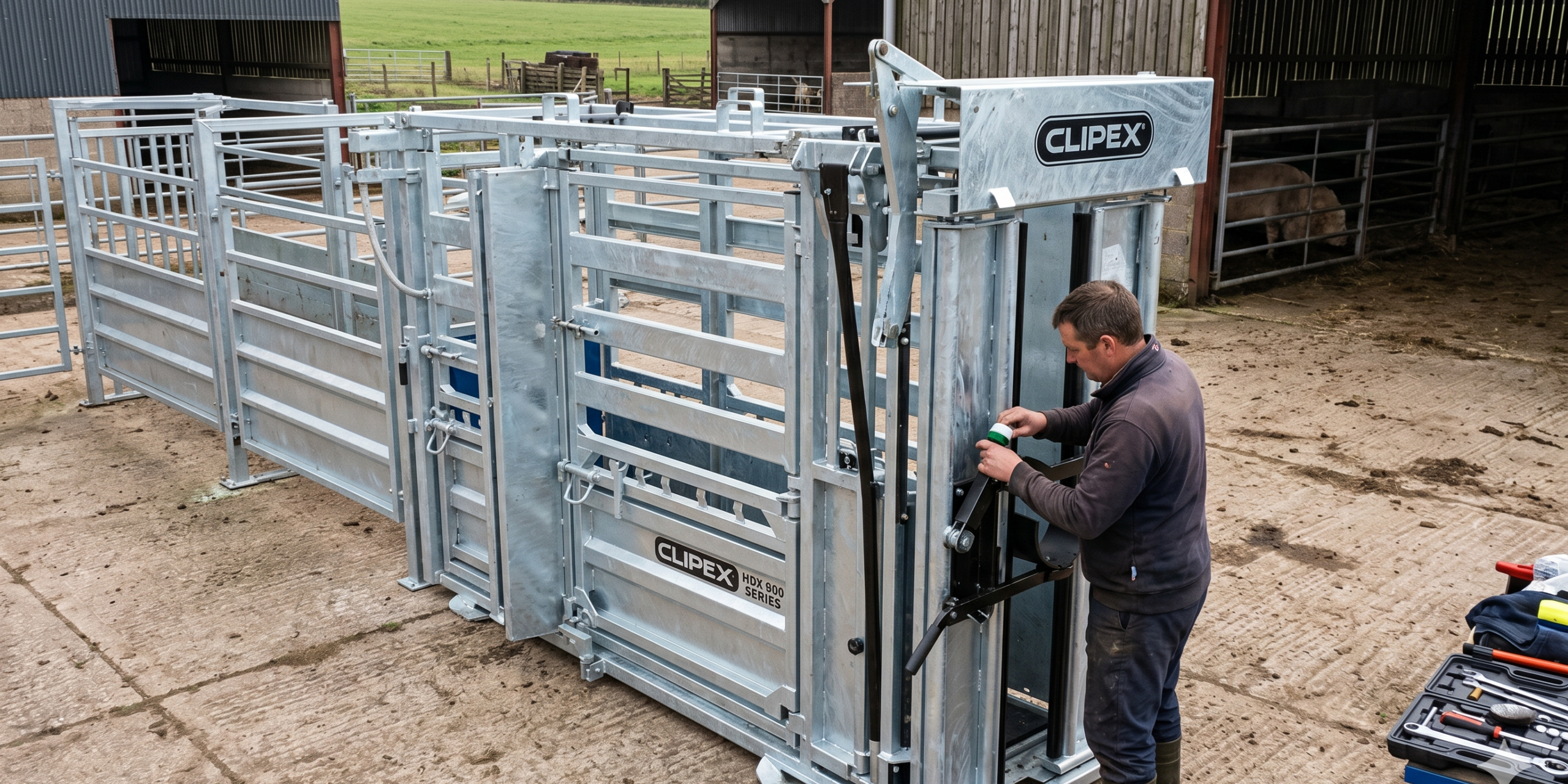
Maintain Your Cattle Crush For Longevity
Cattle crushes are a core component of cattle handling equipment on any UK farm. Whether you’re running a beef suckler herd, a dairy unit, or a mixed enterprise, the crush is central to safe, efficient handling. It’s used for everything from TB testing and dosing to foot trimming, AI, and veterinary work. But despite its importance, many crushes are used hard and maintained rarely – which shortens their lifespan, increases safety risks, and slows down routine tasks.
A well‑maintained crush can last 15–25 years or more. A neglected one can become dangerous in just a few seasons. This guide explains how to maintain your crush properly, whether you’re using manual crushes or pneumatic crushes, and how good maintenance supports the performance of your wider cattle handling system.
Cattle Crush Selection for UK Farms: Integration That Works
1. Why Crush Maintenance Matters More Than Most Farmers Realise
A cattle crush is exposed to constant pressure, impact, and movement. Over time, this causes wear that can lead to:
- Noisy, stiff, or unreliable latches
- Gates that don’t close properly
- Head bails that fail to lock securely
- Bent or weakened steel
- Slippery or damaged flooring
- Increased risk of cattle escaping
- Higher risk of injury to handlers
Poor maintenance doesn’t just reduce equipment lifespan – it directly affects safety, cattle flow, and handling efficiency.
A well‑maintained crush:
- Improves cattle confidence and reduces stress
- Makes handling faster and smoother
- Reduces labour requirements
- Prevents costly breakdowns
- Protects staff from avoidable injuries
Good maintenance is an investment, not a chore.
2. Start With a Thorough Annual Inspection
At least once a year – ideally before TB testing season – carry out a full inspection in order to maintain your crush.
What to check:
Structural integrity
- Look for cracks, rust, or weakened welds
- Check for bent bars or panels
- Ensure the frame is stable and level
Head bail and locking mechanisms
- Test the locking action repeatedly
- Ensure the bail closes smoothly and securely
- Check for worn or loose components
Side gates and access points
- Ensure gates open fully and close tightly
- Check hinges for wear
- Test latches for reliability
Flooring
- Look for worn rubber, broken concrete, or slippery surfaces
- Replace damaged mats immediately
Anti‑backing systems
- Ensure ratchets or one‑way gates engage properly
- Replace worn teeth or springs
A detailed inspection helps you catch small problems before they become expensive or dangerous.
3. Lubricate Moving Parts Regularly
Both manual crushes and pneumatic crushes rely on smooth movement for safe, efficient operation.
Lubricate:
- Head bail pivots
- Latch mechanisms
- Hinges
- Sliding gates
- Ratchet systems
- Hydraulic or pneumatic linkages (as recommended by the manufacturer)
Use a high‑quality agricultural lubricant and avoid over‑oiling, which attracts dust and debris.
Tip:
Lubricate lightly but often – especially during busy handling periods to maintain your cattle crush.
4. Keep the Crush Clean and Free of Debris
Dirt, dung, bedding, and dust build up quickly in and around the crush. This causes:
- Stiff movement
- Increased wear on moving parts
- Slippery surfaces
- Blocked pneumatic or hydraulic components
- Rust and corrosion
Cleaning routine:
- Hose down the crush after heavy use
- Remove bedding and debris from hinges and latches
- Scrub flooring to maintain grip
- Dry metal surfaces to prevent rust
A clean crush is a safer, longer‑lasting crush.
5. Maintain Pneumatic and Hydraulic Systems Properly
If you’re using pneumatic crushes, maintenance is even more important.
Key checks for pneumatic systems:
- Inspect air lines for leaks
- Drain moisture from compressors
- Check pressure levels regularly
- Ensure valves and cylinders move smoothly
- Replace worn seals promptly
For hydraulic systems:
- Check fluid levels
- Inspect hoses for cracks or leaks
- Ensure smooth, quiet operation
- Replace filters as recommended
Pneumatic and hydraulic crushes offer huge efficiency benefits – but only when maintained correctly.
6. Replace Worn Components Before They Fail
Many farmers wait until something breaks before replacing it. This is risky and often more expensive, it is always cheaper and safer to maintain your cattle crush.
Replace immediately if you notice:
- Worn latch teeth
- Bent or cracked bars
- Loose bolts
- Damaged flooring
- Weak springs
- Noisy or stiff hinges
Small parts are cheap. Injuries and breakdowns are not.
7. Keep the Area Around the Crush Safe and Functional
A crush doesn’t operate in isolation – it’s part of a wider cattle handling system. Poor conditions around the crush can undermine even the best equipment.
Maintain:
- Good lighting
- Non‑slip approach flooring
- Clear access for cattle and handlers
- Safe escape routes
- Solid race sides leading into the crush
A well‑maintained environment improves cattle flow and reduces stress.
8. Train Staff to Use the Crush Correctly
Even the best‑maintained crush will wear out quickly if used incorrectly.
Train staff to:
- Close gates gently
- Avoid slamming latches
- Use the head bail properly
- Keep cattle calm and moving steadily
- Report issues immediately
Good handling protects both cattle and cattle equipment.
9. Keep a Maintenance Log
A simple logbook helps you track:
- Lubrication dates
- Repairs
- Replacements
- Annual inspections
- Pneumatic/hydraulic servicing
This ensures nothing gets missed and helps you plan future upgrades.
Final Thoughts on How To Maintain Your Cattle Crush
A cattle crush is one of the most heavily used and most important pieces of cattle handling equipment on any farm. Regular maintenance isn’t optional – it’s essential for safety, efficiency, and long‑term performance.
By inspecting your crush regularly, lubricating moving parts, maintaining pneumatic or hydraulic systems, and keeping the surrounding area safe, you’ll extend the life of your equipment and protect both cattle and handlers.
If you want information on FETF approved handling equipment or how to apply:
FETF 2026 Livestock Grant Guide: Secure 50% Funding
For more useful post visit: | Cattle Equipment Advice | Livestock Handling & Yard Design | Grants & Funding | Bovine TB Prevention | Electronic Identification & Livestock Traceability
⚠️ IMPORTANT: FETF 2026 DEADLINE
The application window for the Farming Equipment and Technology Fund (FETF) 2026 is strictly time-limited.
Window Closes: Midday on 28th April 2026.
Our Recommendation: To ensure your bespoke yard design and itemised quotes are ready for submission, please request your quotes by 21st April 2026. Applications submitted in the final 48 hours often face technical delays on the RPA portal.
FETF 2026 Success Guide & Item Code Cheat Sheet
Avoid costly mistakes, get the correct specs, and improve your chances of a successful FETF application.
Bullet points:
- Includes key item codes (FETF60, FETF61 etc)
- Avoid common application mistakes
- Designed for cattle & sheep handling upgrades