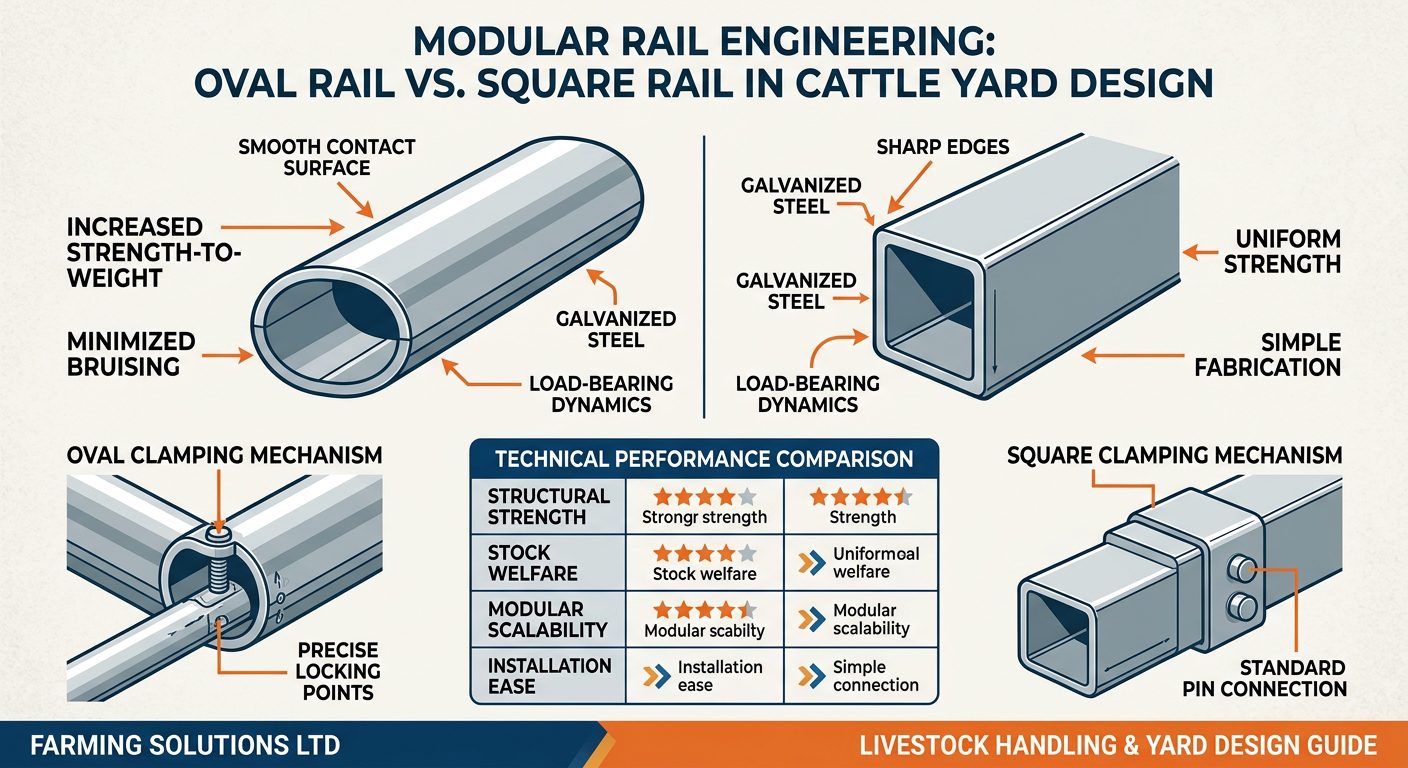
When designing a heavy-duty cattle handling facility, steel frame selection is often oversimplified to wall thickness alone. However, the cross-sectional geometry of the rail profile-specifically Oval Rail vs. Square RHS (Rectangular Hollow Section) vs. Traditional Round Pipe-fundamentally dictates how a handling yard absorbs kinetic energy, protects stock from bruising, and withstands continuous pressure from heavy…
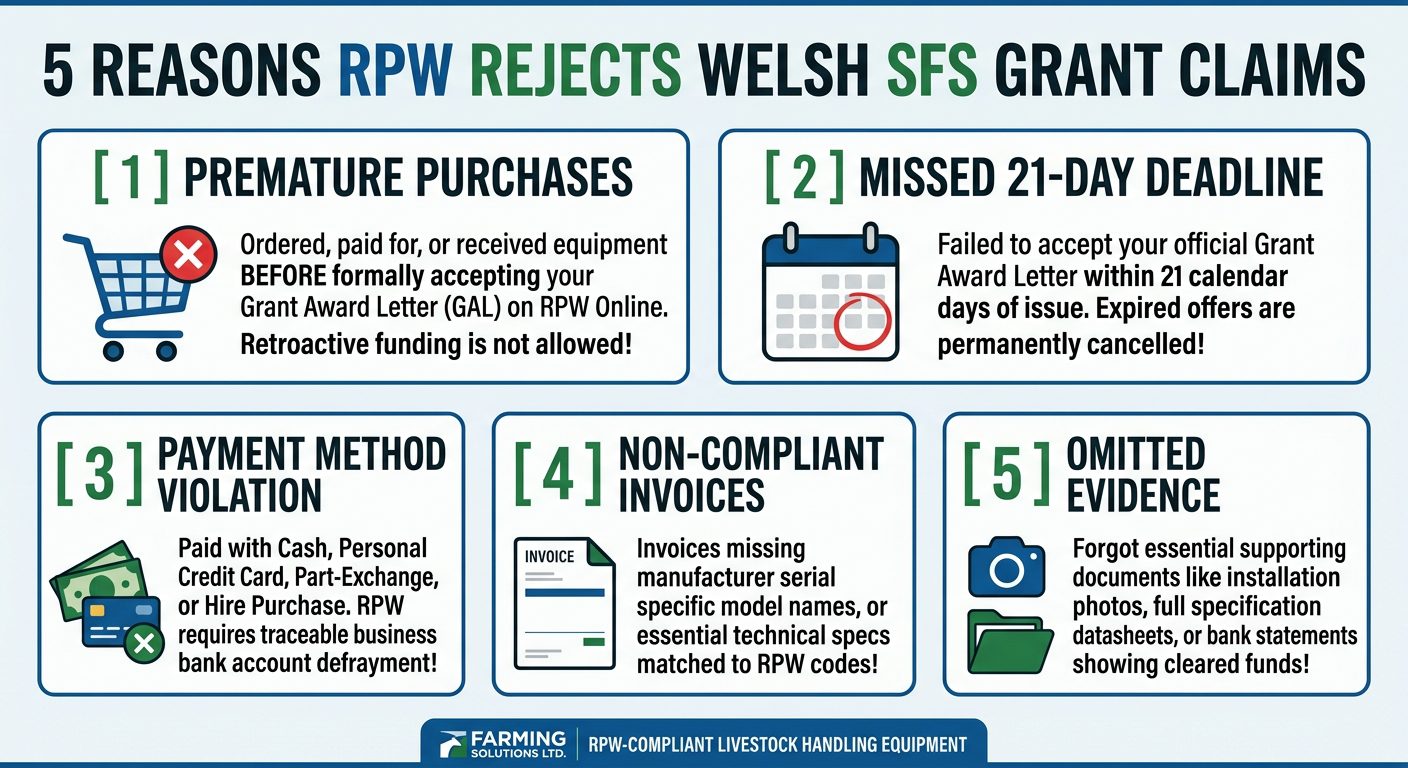
The 2026 Sustainable Farming Scheme (SFS) Optional Capital: Production & Efficiency Grant provides Welsh farmers with up to 40% co-funding (capped at £15,000 per CRN) for essential livestock handling and EID tech. However, submitting an application via RPW Online is only the first step. Every year, valid claims are rejected or penalised by Rural Payments…
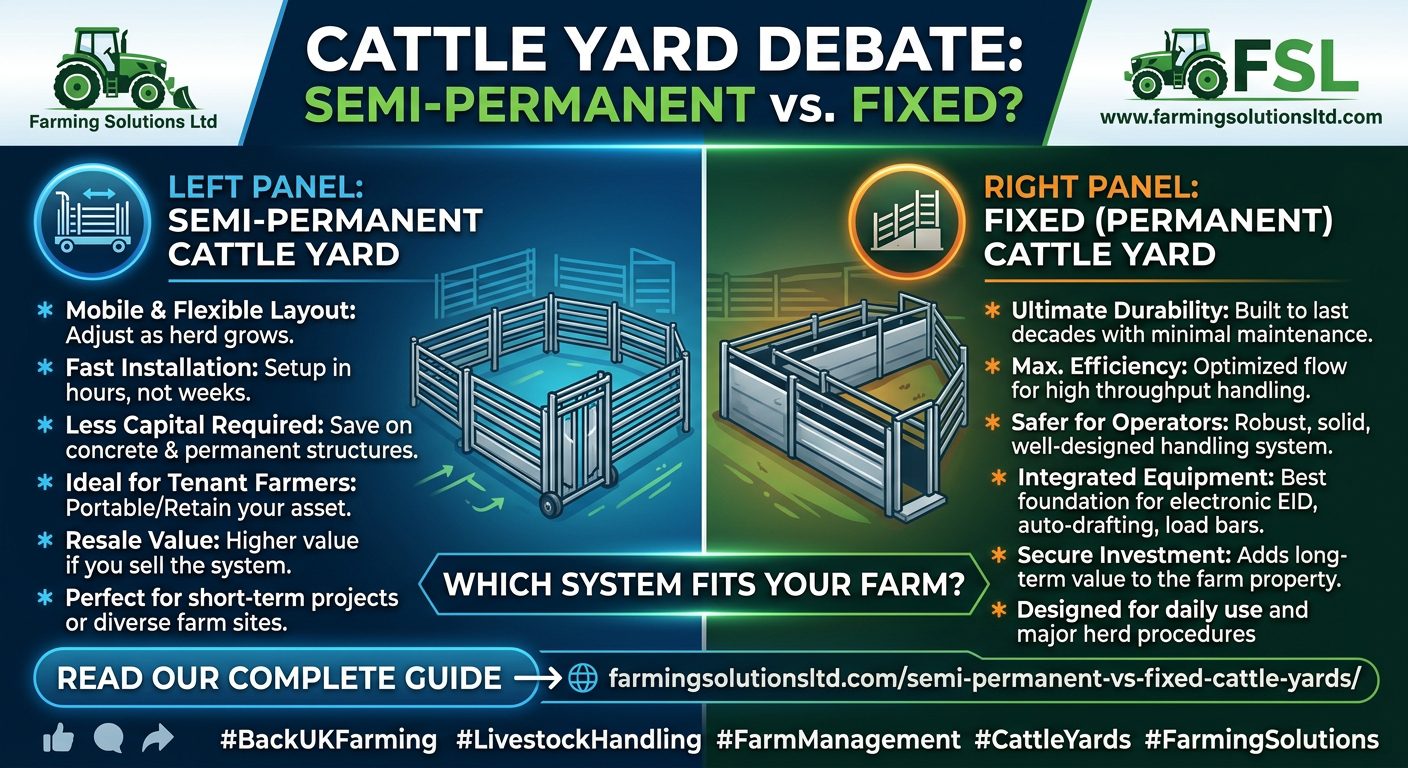
Semi-Permanent vs. Fixed Steel Cattle Yard Semi-Permanent vs. Fixed Steel Cattle Yard – Designing a cattle yard is a major capital investment. Choosing between a semi-permanent modular yard and a fixed concrete-and-steel infrastructure determines how easily your yard can adapt to changes in herd sizes, tenancy agreements, and operational workflows. 1. Architectural & Structural…
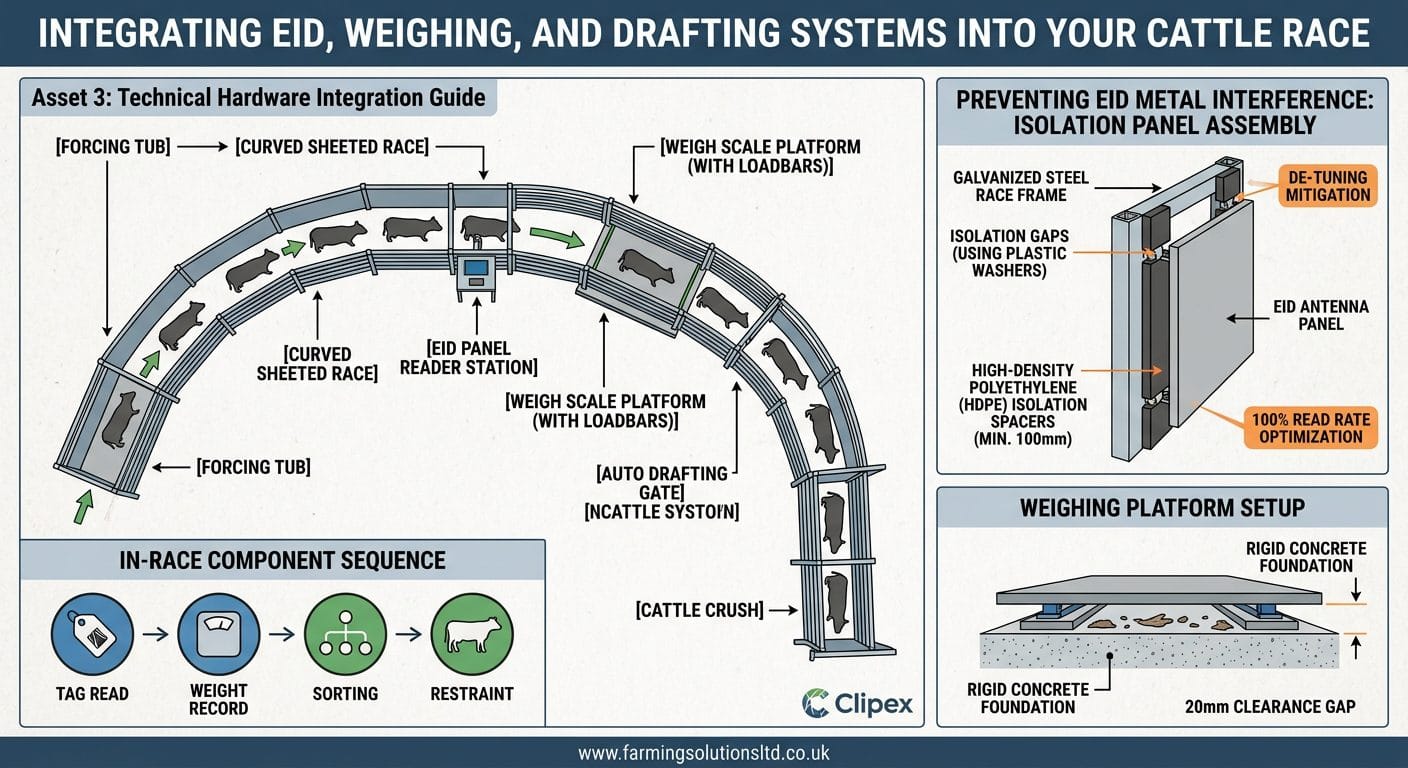
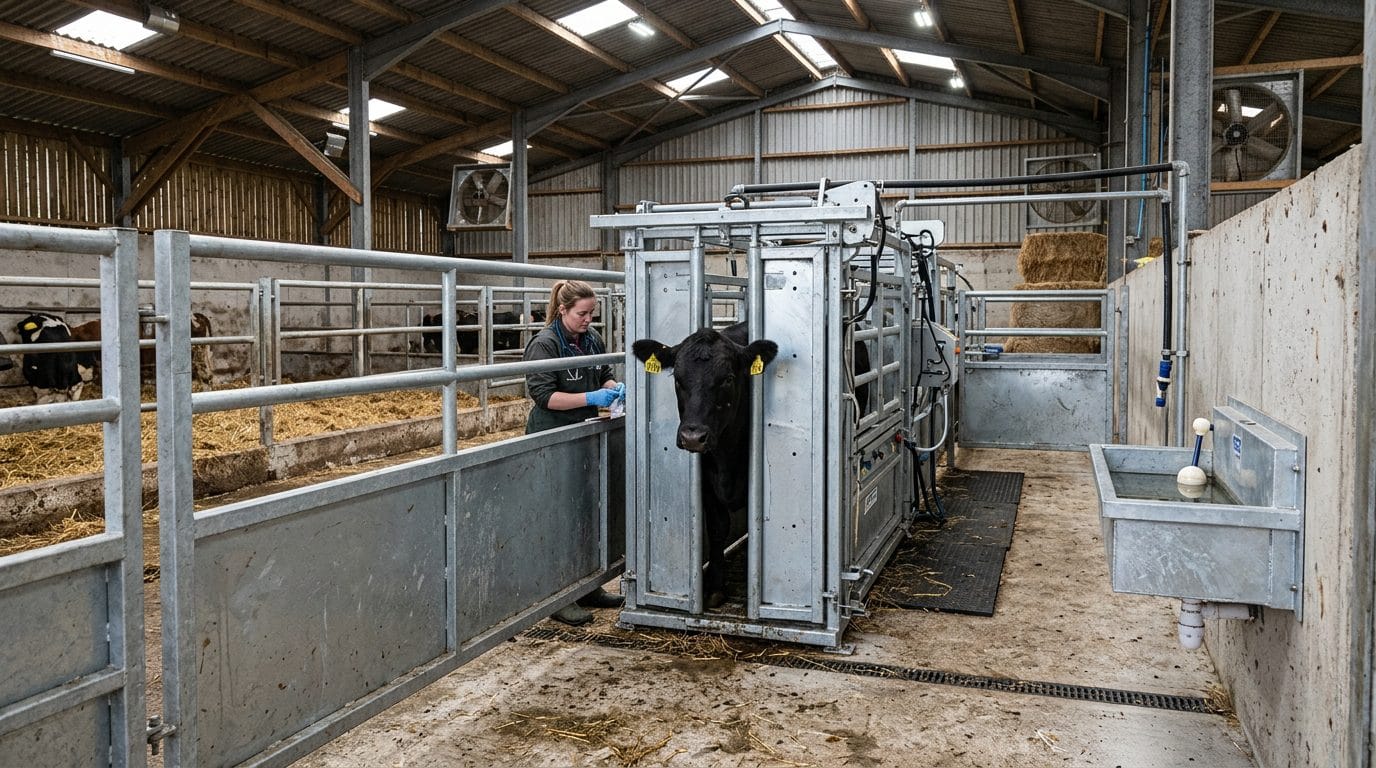
EID Weighing Drafting Race Integration EID weighing drafting race integration – Integrating hardware into a cattle race requires careful attention to spatial ordering and structural placement. Mounting EID antennas directly onto heavy galvanised steel frames can detune the EID reader signal and cause missed tag reads. [ Forcing Tub ] ──► [ Curved Race ]…
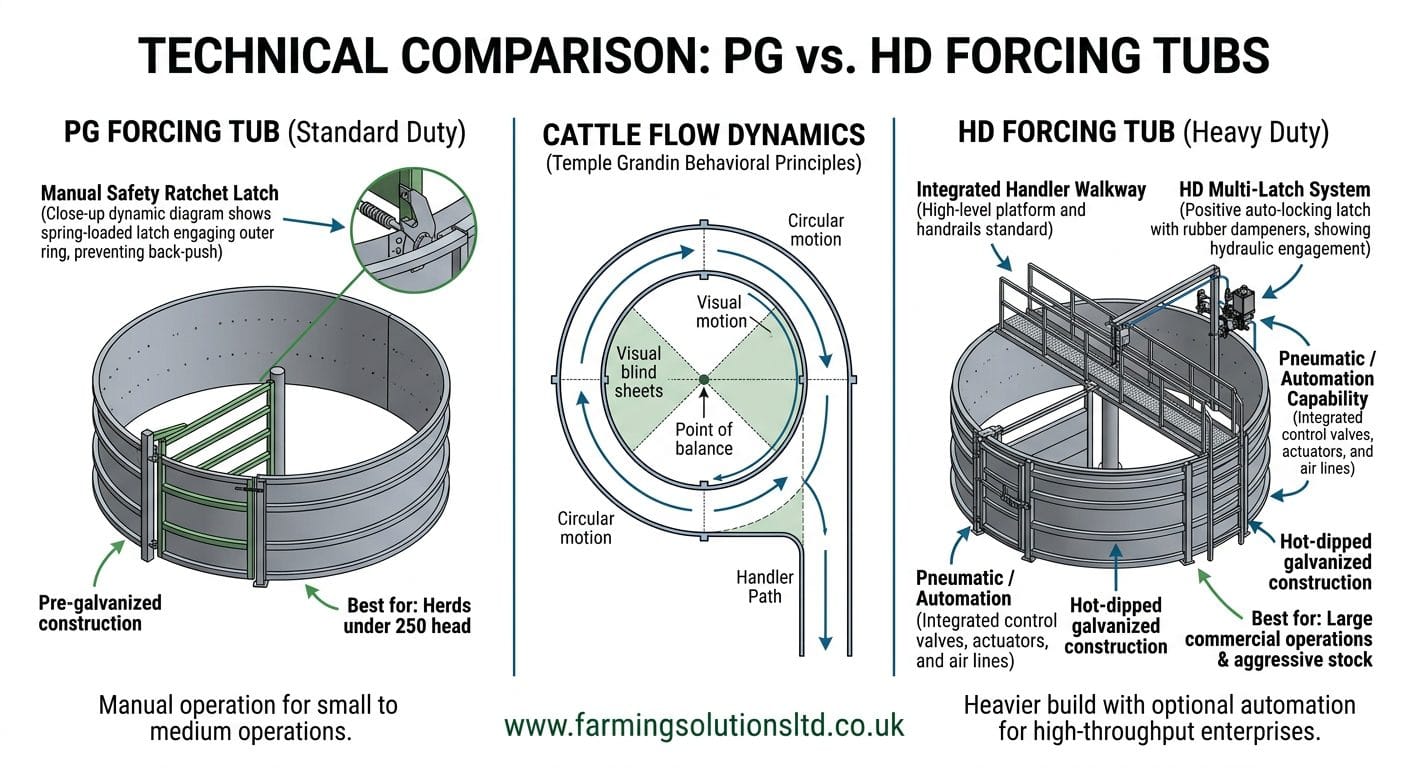
PG Forcing Tub vs. HD Forcing Tub PG Forcing Tub vs. HD Forcing Tub – A forcing tub acts as the funnel of your cattle handling system, using natural cattle behaviour to encourage movement into the race. Choosing between the PG Forcing Tub and the HD Forcing Tub comes down to herd size, handling frequency,…
The 2026 Sustainable Farming Scheme (SFS) Optional Capital: Production & Efficiency Grant offers beef and dairy producers across Wales up to 40% grant funding (excluding VAT) on standard-specification livestock handling equipment. With public funding capped at £15,000 per Customer Reference Number (CRN) per financial year, structuring your application correctly is key to transforming your yard…
The spread of Bluetongue virus serotype 3 (BTV-3) poses a critical threat to UK sheep and cattle producers. Passive monitoring and regional restrictions alone are no longer enough to protect livestock health, farm productivity, and rural livelihoods. To prevent widespread economic damage and safeguard animal welfare, Farming Solutions Ltd is calling on Defra and the…
On-Farm Biosecurity: Designing Effective Isolation Housing & Quarantine Pens Cattle isolation housing: Bovine TB – Managing livestock movements is a critical line of defense against Bovine Tuberculosis (bTB). Unscreened, newly purchased stock or animals returning from shared grazing can unwittingly introduce Mycobacterium bovis (M. bovis) into a clean herd. Following our recommendations on physical barriers…
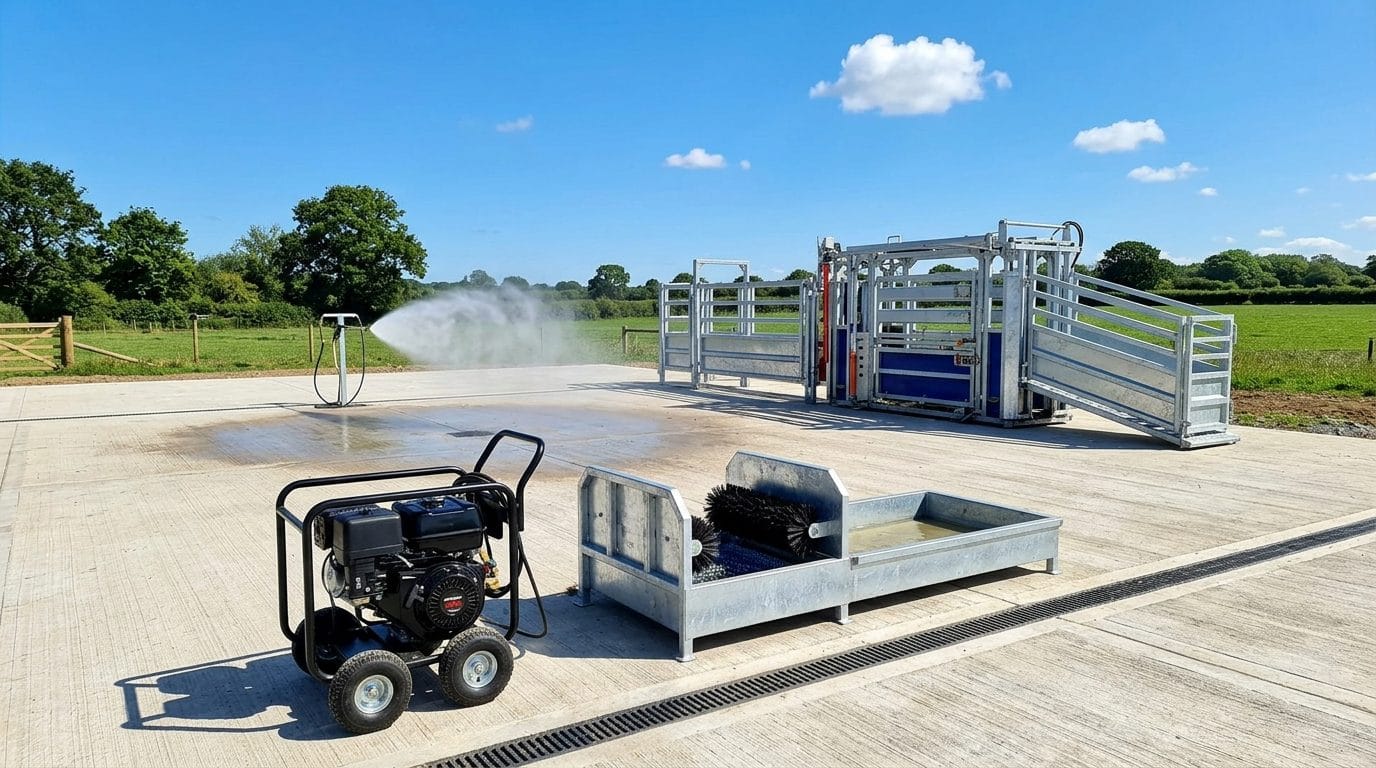
On-Farm Disinfection Protocols: Implementing DEFRA-Approved Standards for Bovine TB Bovine TB Disinfection Protocols – Establishing physical wildlife barriers protects your farm boundary, but robust cleansing and bovine TB disinfection protocols are required to eliminate Mycobacterium bovis (M. bovis) within the holding. The bacterium that causes Bovine Tuberculosis (bTB) can survive for months in organic matter,…
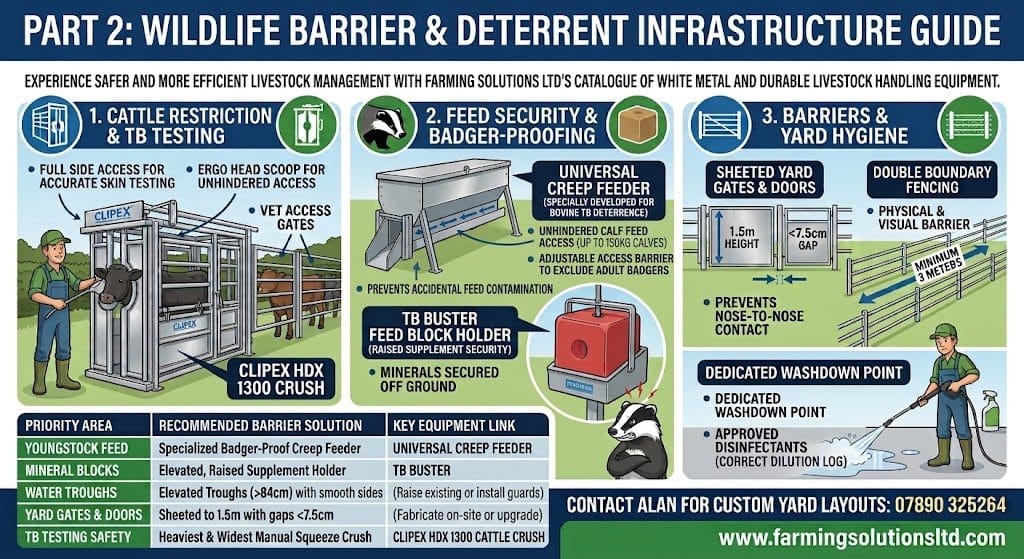
Securing Your Farm: Effective Wildlife Barriers for Bovine TB Deterrence Bovine Tuberculosis (bTB) transmission isn’t limited to direct cattle contact; environmental contamination via wildlife vectors is a major risk factor. Badgers and other wild mammals can harbour and spread M. bovis, contaminating feed, water, and grazing land. The previous post outlined the fundamental risk vectors…