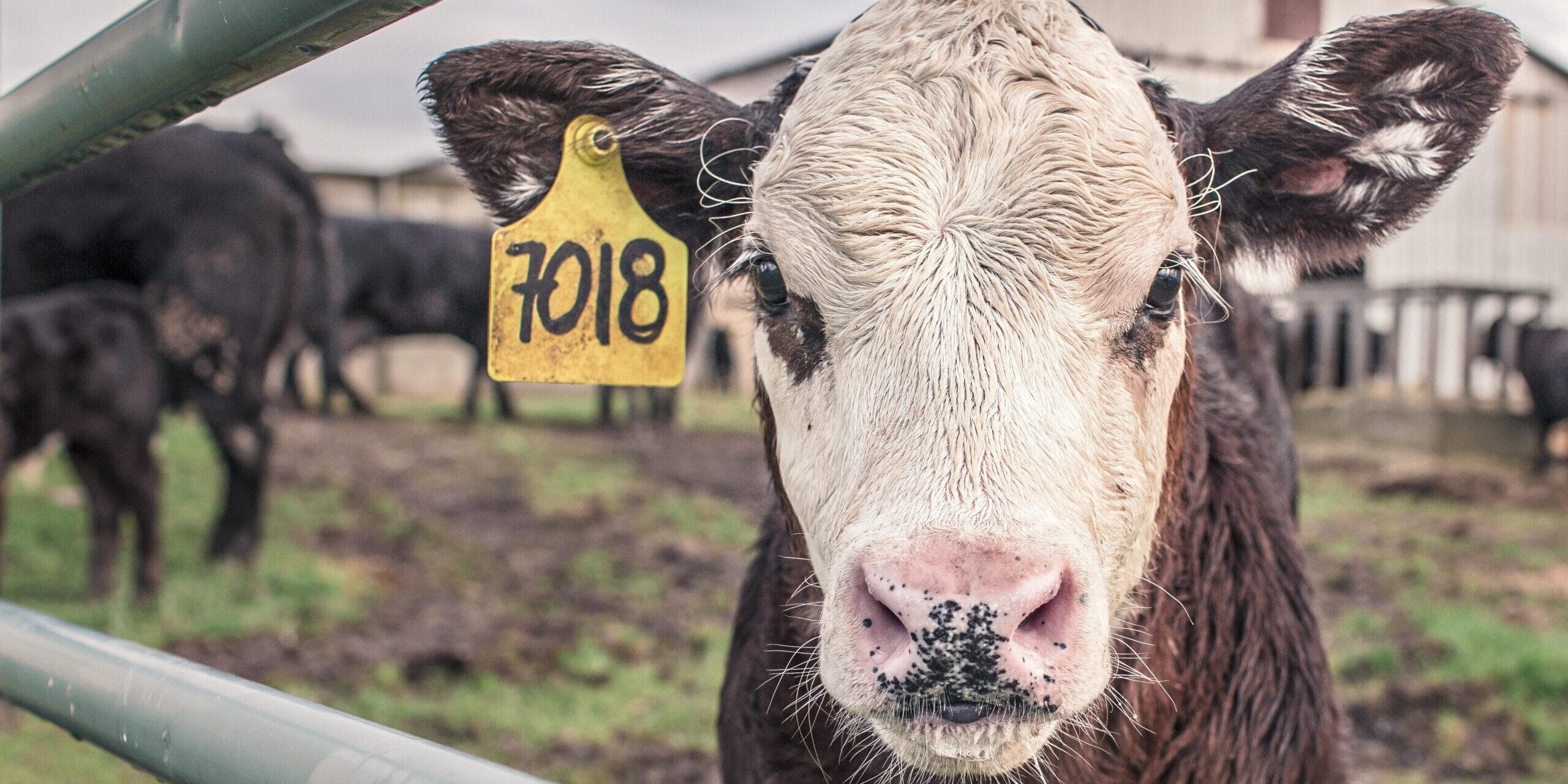
Beef suckler herds and crush feature requirements
Crush features for beef suckler herds – Suckler herds present some of the toughest handling challenges on UK farms. Cows with calves at foot, strong store cattle, and unpredictable temperament all demand cattle handling equipment that is robust, safe and designed to give handlers maximum control.
Unlike dairy cows, which are handled daily and tend to be calmer, suckler cattle may only be brought into the yard a handful of times a year – and when they do, they can be powerful, reactive, and highly protective.
Choosing the best crush features for beef suckler herds is therefore essential.Well‑designed cattle crushes improve safety, reduces stress, speeds up routine work, and protects both livestock and handlers. This guide breaks down the best crush features for beef suckler herds and explains how different types of crushes – including manual crushes and pneumatic crushes – fit into modern cattle handling systems.
Why Beef Suckler Herds Need Specialist Crush Features
Crush Features for Beef Suckler Herds – Beef suckler cattle behave differently from dairy cows. They are:
- Handled less frequently
- More reactive to pressure and noise
- Stronger and more muscular
- More protective, especially cows with calves
- Less accustomed to confined spaces
This means the crush must be built to withstand force, prevent escape attempts, and allow handlers to work safely around unpredictable animals.
1. Heavy‑Duty Construction Is Essential
The number one priority for suckler herds is strength. A crush that flexes, rattles, or shifts under pressure is not only unsafe – it increases stress and makes handling more difficult.
Key strength features to look for
- Reinforced steel frames
- Strong, fully welded joints
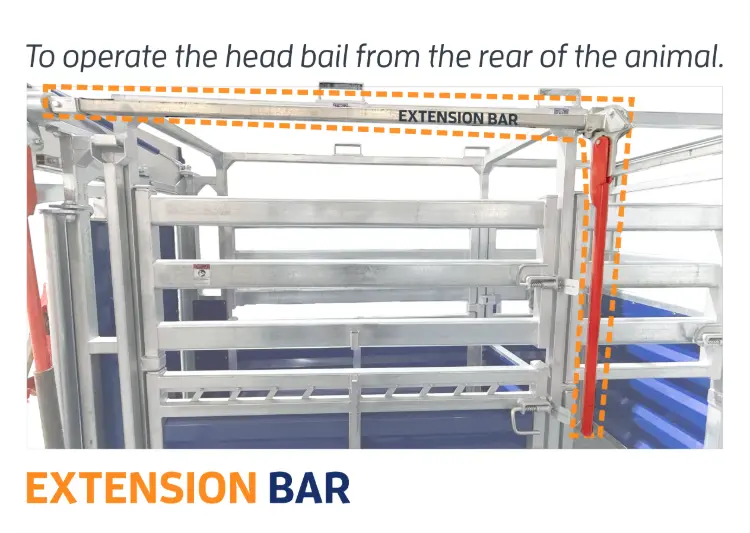
- Heavy‑duty head bails
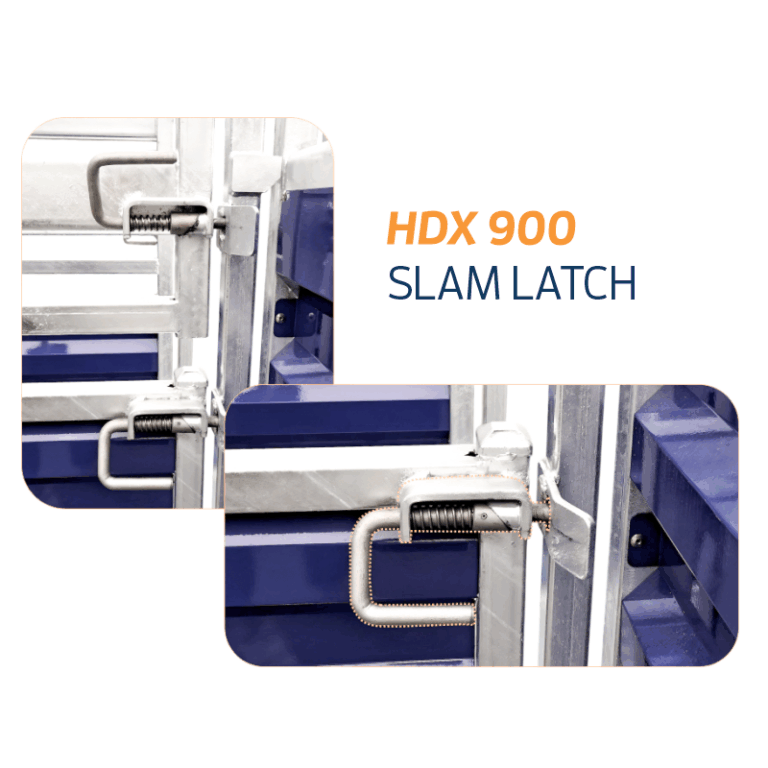
- High‑strength locking mechanisms
- Solid side panels
- Anti‑twist base or floor mounting points
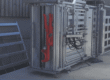
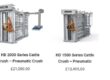
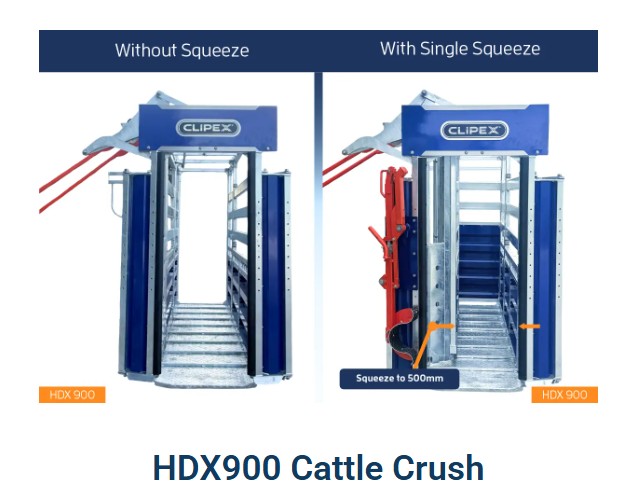
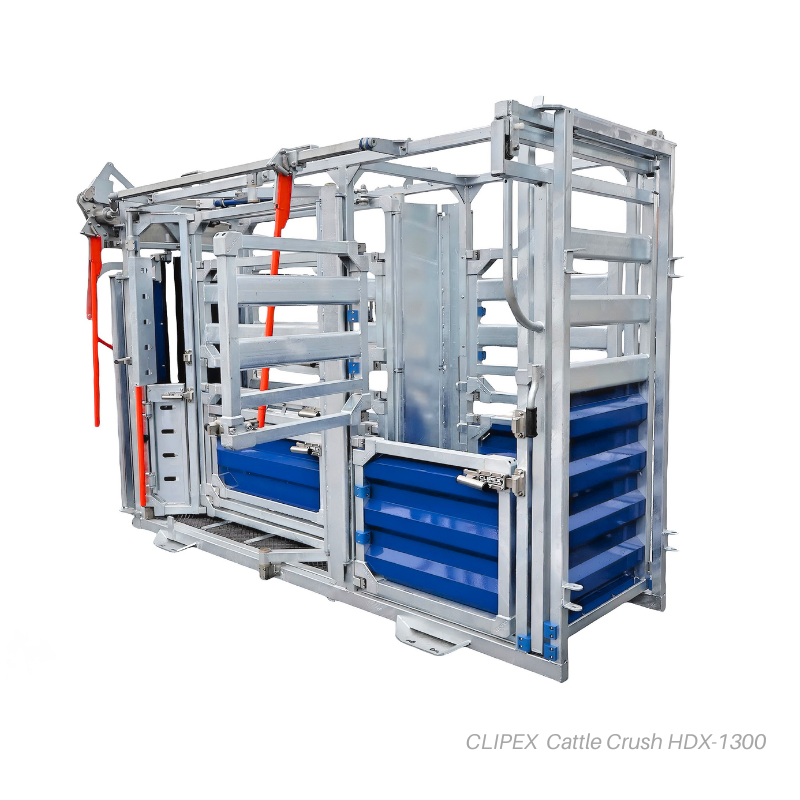
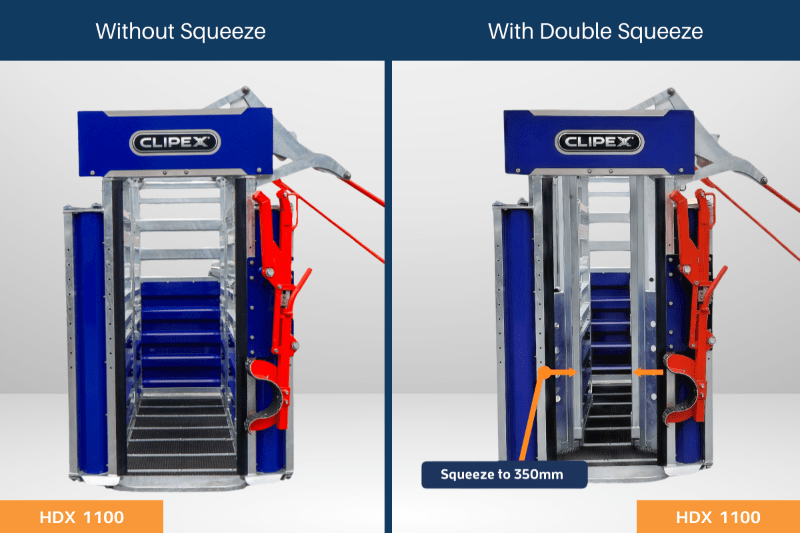
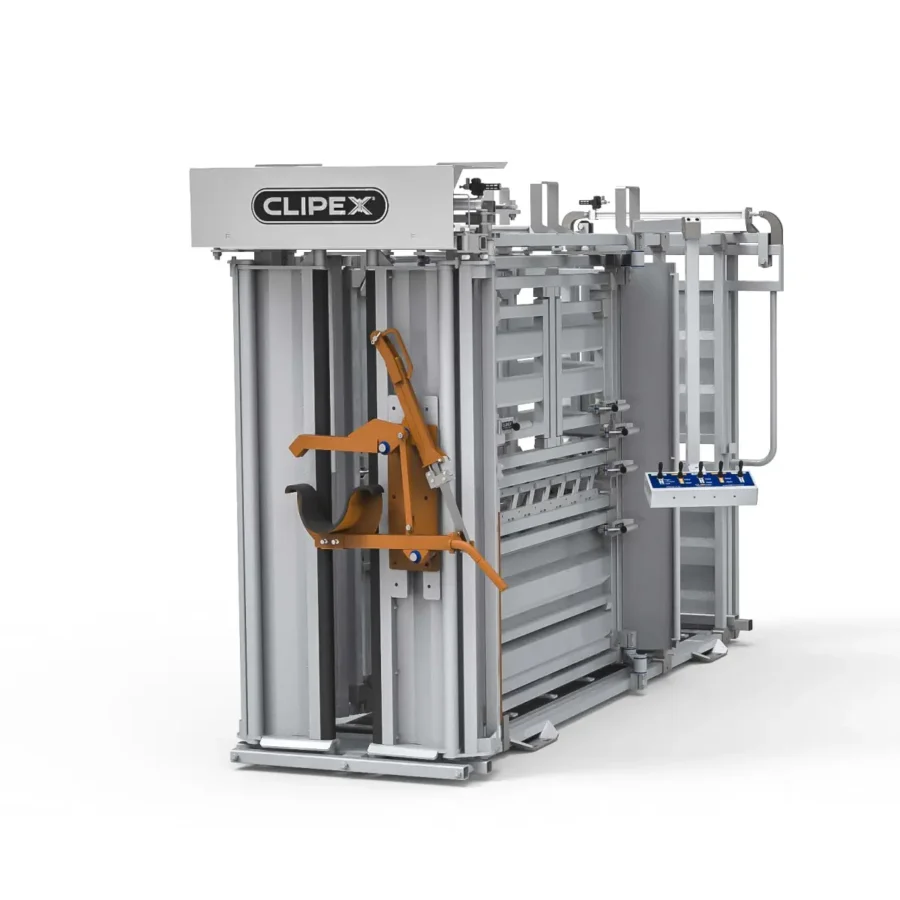
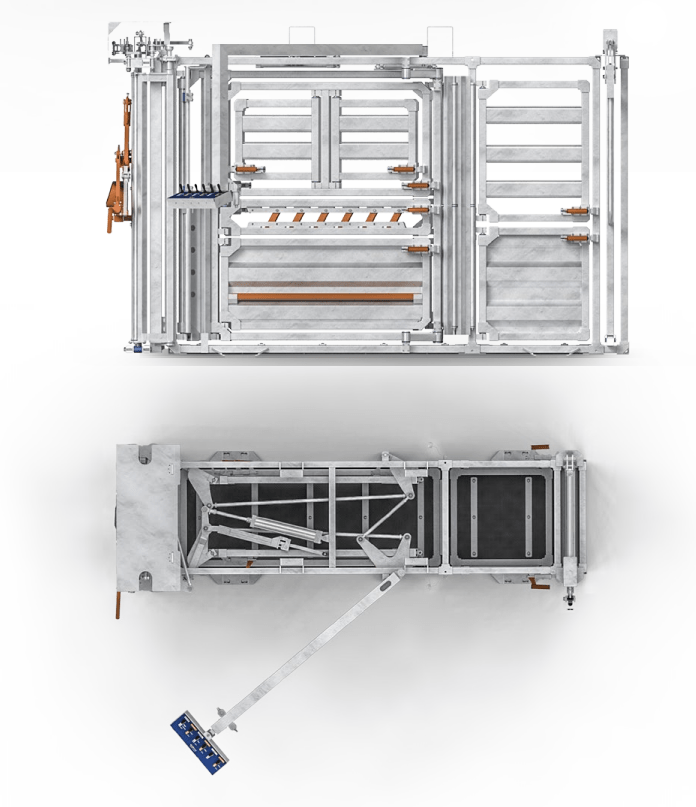
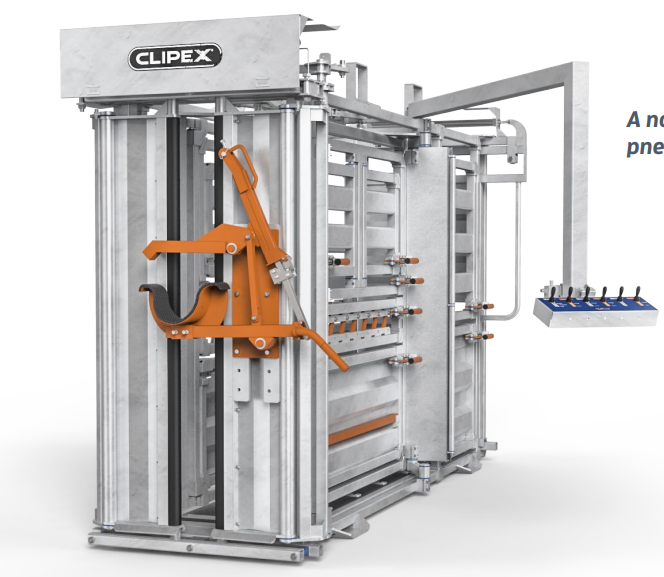
Heavy‑duty crushes like the Clipex HD and HDX Series are specifically engineered for large, powerful cattle and are ideal for suckler units.
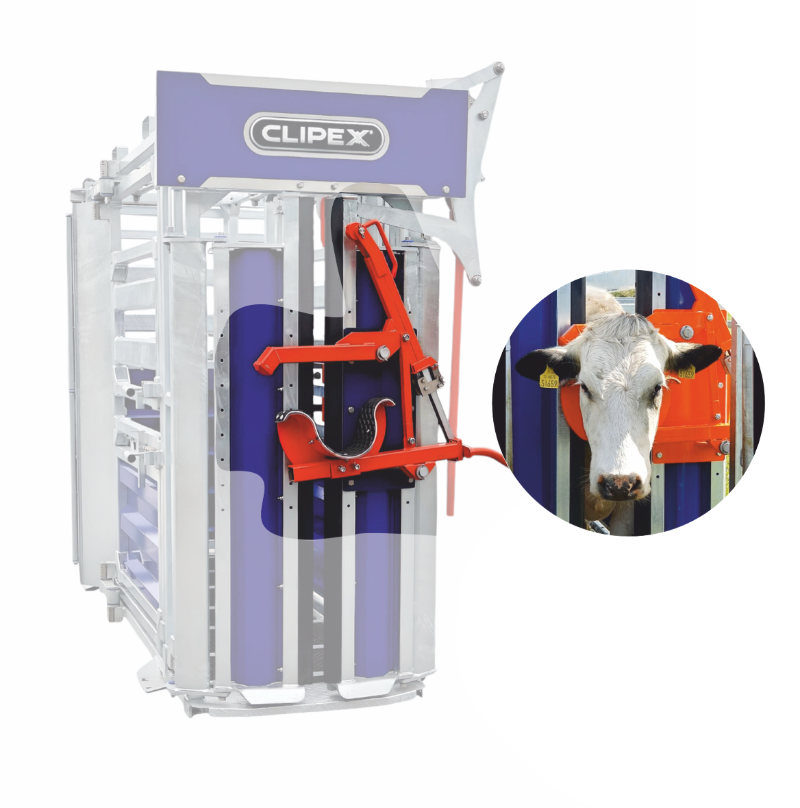
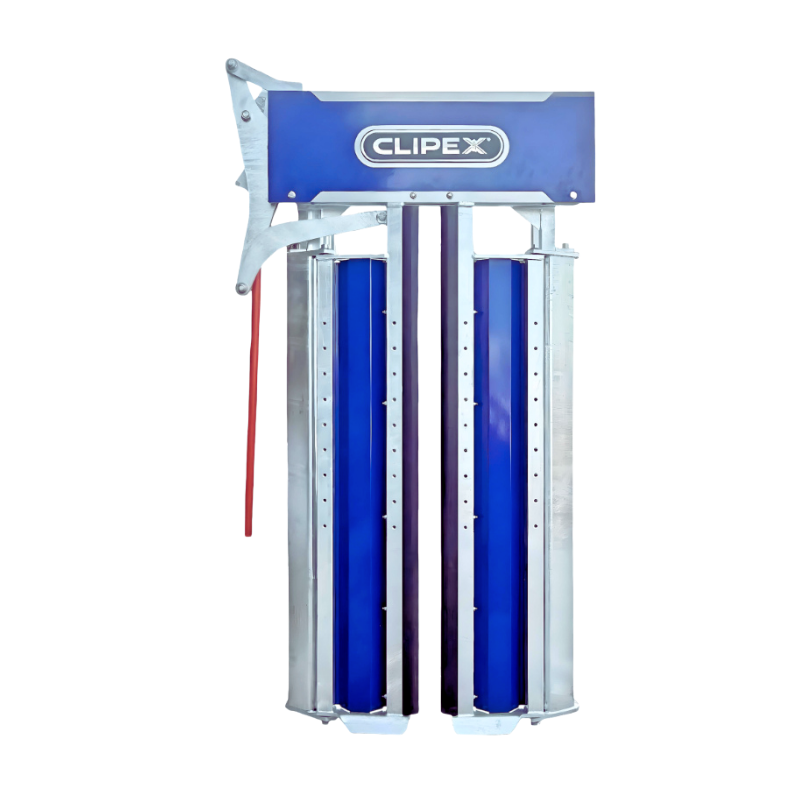
2. A Fast, Reliable Head Bail
Beef cattle often move quickly when entering the crush. A fast‑acting, easy‑to‑operate head bail is essential for safe, controlled capture.
The best head bails for suckler herds offer:
- Quick closing action
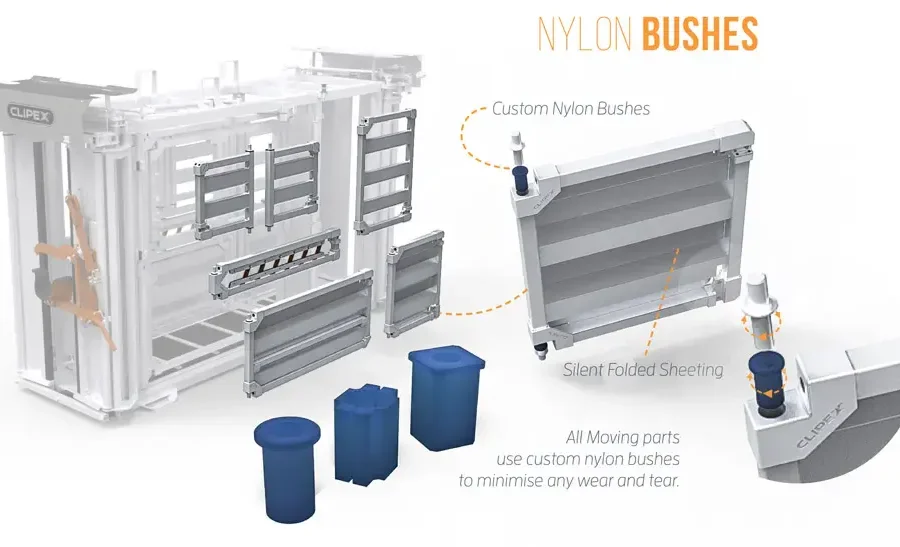
- Quiet operation
- Strong locking systems
- Adjustable width for different cattle sizes
- Smooth edges to prevent bruising
A reliable head bail reduces the risk of missed catches, which can be dangerous for both cattle and handlers.
3. Anti‑Backing Systems for Better Control
Beef cattle frequently attempt to reverse when stressed. An effective anti‑backing device prevents this and keeps cattle moving forward through the system.
Common anti‑backing options include:
- Ratchet‑style anti‑backing bars
- Swing‑down anti‑backing gates
- One‑way latches in the race
These features improve flow and reduce the risk of cattle turning or reversing unexpectedly.
4. High, Solid Sides to Prevent Climbing or Jumping
Suckler cattle are more likely to attempt escape when confined. High, solid sides on both the crush and the race reduce distractions and prevent animals from climbing or jumping.
Benefits of solid sides
- Reduced visual stimuli
- Improved forward movement
- Lower stress levels
- Increased handler safety
Solid sides are a must‑have in any suckler‑focused cattle handling system.
5. Excellent Side Access for Safe Handling
Beef herds require a wide range of routine tasks, including:
- TB testing
- Dosing and vaccination
- Pregnancy diagnosis
- Tagging
- Blood sampling
- Veterinary inspections
A good crush must provide safe, convenient access to all parts of the animal.
Look for:
- Split side gates
- Full‑height access doors
- Removable side panels
- Safe access to both front and rear limbs
These are the best crush features for beef suckler herds as they make handling faster and safer, especially when working with unpredictable cattle.
6. Quiet, Low‑Stress Operation
Noise is a major stress trigger in beef cattle. Loud latches, rattling gates, and metal‑on‑metal contact can cause animals to panic or become aggressive.
Low‑stress features include:
- Quiet‑closing head bails
- Rubber‑damped gates
- Smooth, rounded edges
- Pneumatic or hydraulic operation
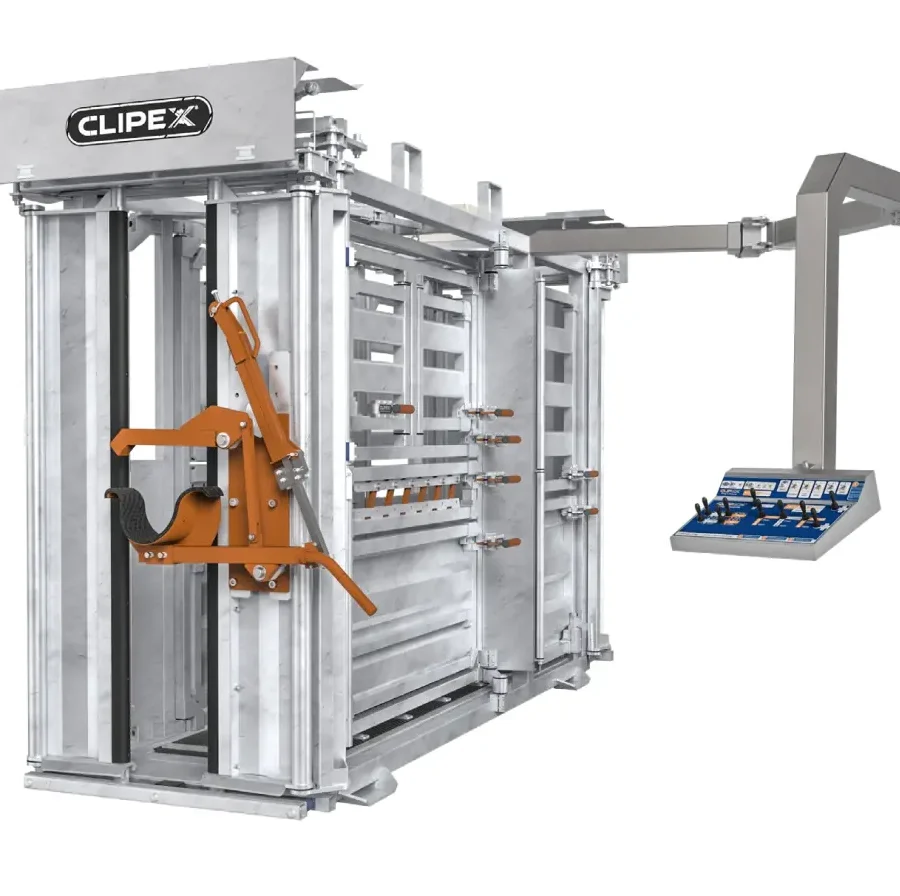
This is where pneumatic crushes excel – their smooth, quiet movement significantly reduces stress and improves cattle flow.
7. Manual vs Pneumatic Crush Features for Beef Suckler Herds
Both manual crushes and pneumatic crushes have a place in beef systems, but the right choice depends on herd size, temperament, and labour availability.
Manual Crushes
Manual crushes are a strong choice for many suckler herds because they are:
- Cost‑effective
- Simple to operate
- Reliable with minimal maintenance
- Suitable for remote or mobile setups
- Strong enough for large cattle (in heavy‑duty models)
A heavy‑duty manual crush is often ideal for small to medium suckler herds.
Pneumatic Crushes
Pneumatic crushes offer significant advantages for larger or more challenging herds:
- Faster, smoother operation
- Reduced physical effort
- Better control of strong or reactive cattle
- Quieter handling
- Improved safety for staff
For high‑throughput suckler units or farms with limited labour, pneumatic crushes can transform handling efficiency.
8. Integration with a Well‑Designed Handling System
Even the best crush won’t perform well if the system feeding into it is poorly designed. Suckler herds benefit from cattle handling systems that prioritise:
- Curved races
- Solid sides
- Non‑slip flooring
- Safe holding pens
- Good lighting
- Effective anti‑backing devices
A well‑designed system reduces stress, improves flow, and makes handling safer for everyone involved.
Final Thoughts on the Best Crush for Beef Suckler Herds
Cattle crush selection – Beef suckler herds require crushes that are strong, safe, and designed to give handlers maximum control. The best crush features for suckler units include:
- Heavy‑duty construction
- Fast, reliable head bails
- Effective anti‑backing systems
- High, solid sides
- Excellent side access
- Quiet, low‑stress operation
- The right choice between manual crushes and pneumatic crushes
Investing in the right cattle handling equipment not only improves safety but also boosts efficiency, reduces stress, and supports better welfare across the herd. We hope this guide helps you choose the best crush features for beef suckler herds.
Take a look at this post if you’re thinking about applying for the FETF grant:
FETF 2026 Livestock Grant Guide: Secure 50% Funding
Read more useful guides: Grants & Funding || Cattle Equipment Advice | Electronic Identification & Livestock Traceability | Bovine TB Prevention | Livestock Handling & Yard Design | Sheep Equipment Advice | Sheep Handling & Yard Design


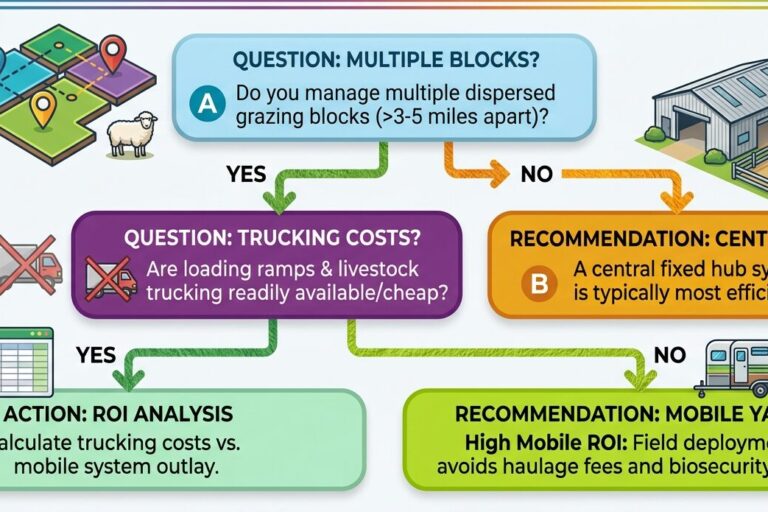
Mobile Sheep Yards: Towing, Setup Times & Field Logistics
Choosing between a permanent sheep handling system and a mobile…
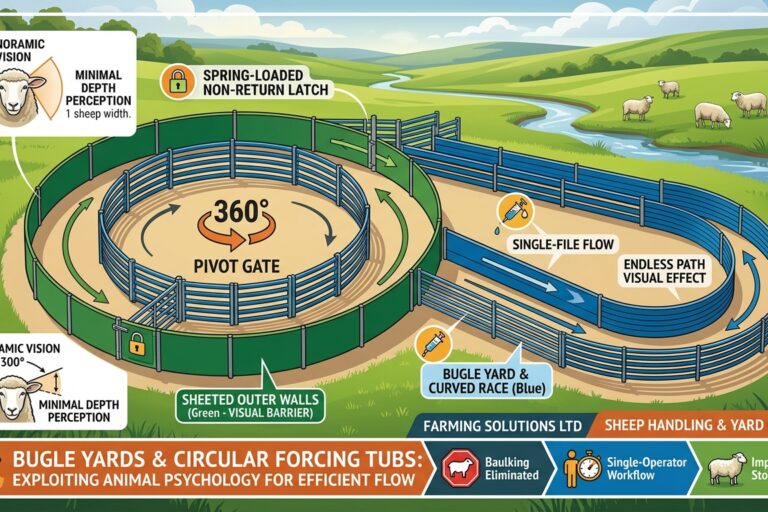
Bugle Yards & Circular Forcing Tub Design for Sheep
Bugle Yards & Circular Forcing Tub Design for Sheep |…
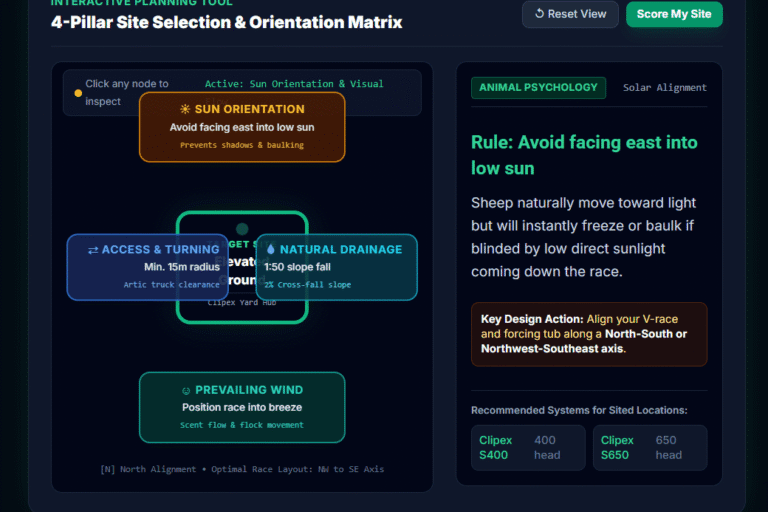
Ground Preparation & Pad Layout for Semi-Permanent Sheep Yards
Ground Preparation & Pad Layout for Semi-Permanent Sheep Yards |…
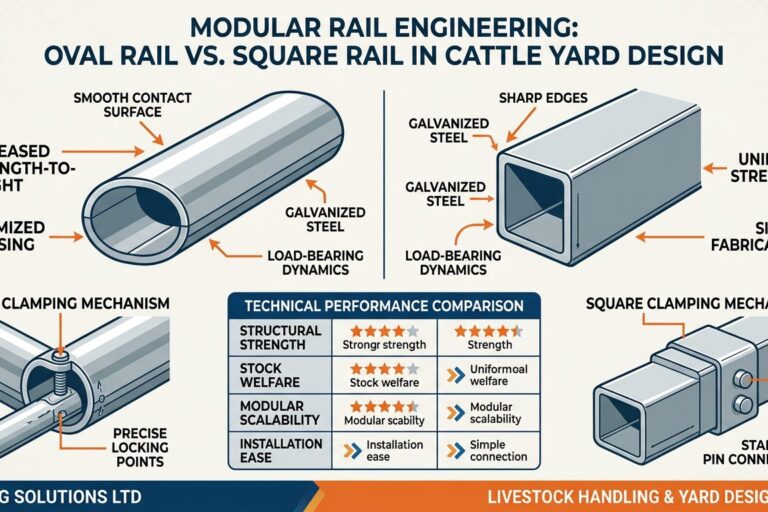
Modular Rail Engineering: Oval Rail vs. Square Rail in Cattle Yard Design
When designing a heavy-duty cattle handling facility, steel frame selection…
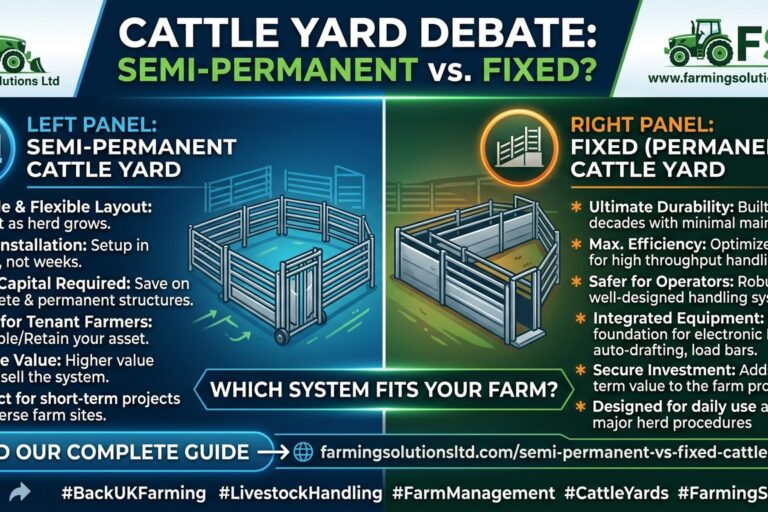
Semi-Permanent vs. Fixed Steel Cattle Yards: Which Is Right for Your Farm?
Semi-Permanent vs. Fixed Steel Cattle Yard Semi-Permanent vs. Fixed Steel…
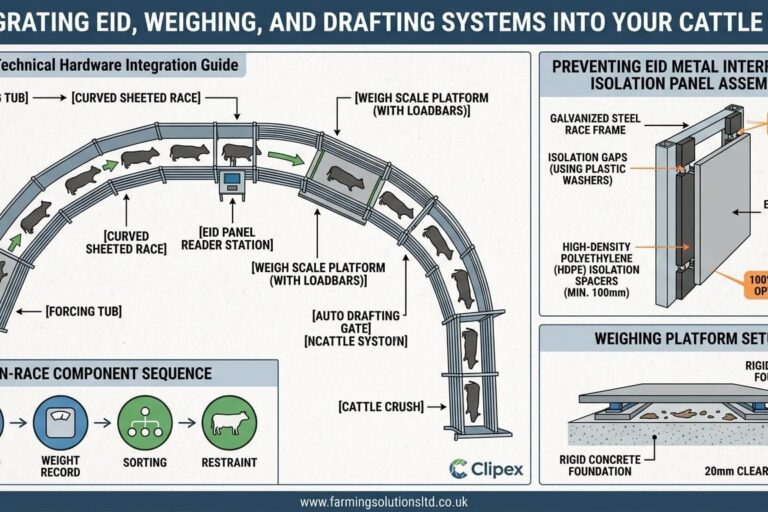
Integrating Weighing, EID Readers, and Drafting Gates into Your Cattle Race
EID Weighing Drafting Race Integration EID weighing drafting race integration…