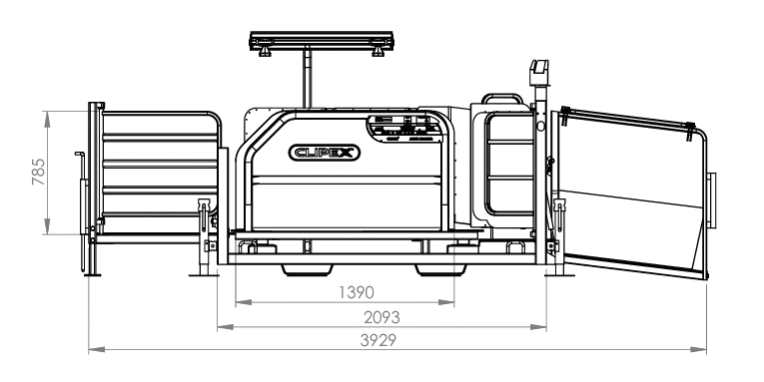
Pneumatic Sheep Handlers
When upgrading to a high-throughput automated system, such as the Clipex® 6-in-1 Auto Sheep Drafter or the Clipex® Automatic Sheep Handler, most of your planning naturally centers around yard layout for sheep handling, electricity, and livestock flow.
However, because these world-class machines use pneumatic cylinders to power their ultra-fast catching gates, pre-catch areas, and multi-way sorting drafts, your choice of power supply is critical.
Operating pneumatic sheep handlers requires a continuous, reliable source of compressed air. Selecting an under-powered compressor, choosing the wrong utility lines, or ignoring moisture control will lead to slow gate cycles, data lagging on your weigh indicators, and catastrophic valve freeze-ups during freezing UK winters.
This in-depth engineering guide covers exactly how to select the right air compressor for your automated yard and how to protect your investment from harsh winter environments.
1. Compressor Selection: Calculating CFM and PSI Requirements
A common mistake is assuming any standard workshop compressor found in a machinery shed can run an automated livestock yard. Pneumatic sheep handlers place unique high-frequency demands on an air system. While a workshop tool requires high pressure occasionally, an automated drafter sorting up to 800 sheep per hour demands continuous volume at a stable, regulated pressure.
When sourcing an air compressor to run your system, pay close attention to these two primary technical metrics:
Cubic Feet per Minute (CFM): This measures air volume flow. Automated systems require a minimum of 9 to 12 CFM of free air delivery (FAD) under continuous load to ensure cylinders cycle instantly.
Pounds per Square Inch (PSI): This measures air pressure. Clipex systems typically operate smoothly between 90 PSI and 120 PSI.
Receiver Tank Size Matters
Because sheep move sequentially, your air consumption happens in intense bursts rather than a steady stream. Therefore, you need a substantial air reservoir to prevent your compressor motor from constantly turning on and off (cycling), which leads to premature motor burnout.
Look for a compressor fitted with a receiver tank with a minimum 100 litres to 150 litres capacity
For multi-site contractor operations or hill farms running off a mobile generator, ensure your portable petrol or diesel compressor matches these exact output parameters.
2. Setting Up Your Air Lines: Flow Efficiency and Pressure Drops
Even the best compressor will struggle if the air cannot travel efficiently from the pump to the sheep crate. If your compressor is housed in a dry outbuilding or workshop away from the main handling yard, you must account for friction loss over distance.
[Compressor Room] —> (Solid Pipe Link) —> [Water Trap / FRL Unit] —> (Flexible Hose) —> [Sheep Handler]
Avoid Long Narrow Hoses: Do not run air through 50 meters of standard 8mm flexible rubber airline. This creates a severe pressure drop, so your compressor might read 110 PSI at the tank, but the machine’s entry gate only receives 75 PSI, causing sheep to balk as gates close sluggishly.
Use Rigid Main Lines: If running air over a distance, install 15mm or 22mm solid copper or specialised high-density blue nylon ring-main piping down the length of the race. Only drop down to a heavy-duty, reinforced flexible hose for the final 2 to 3 meters connecting directly to the machine’s inlet port.
3. Winter Management: Preventing Air Line and Valve Freeze
The single greatest operational threat to pneumatic sheep handlers in the UK is moisture combined with freezing sub-zero winter temperatures.
When atmospheric air is compressed, it generates intense heat. As this heated air moves down your piping system toward the cold handling yard, it cools rapidly, causing moisture to condense inside your lines. If left unmanaged during late-season lamb sorting or winter scanning, this water will freeze into ice crystals, completely blocking the pneumatic solenoid valves, seizing internal cylinder seals, or cracking regulator bowls.
Step 1: Install a Filter-Regulator-Lubricator (FRL) Unit
An FRL unit is mandatory for protecting your livestock equipment. It should be mounted firmly at the entry point of your handling race, immediately before the air line hooks into the sheep handler.
The Filter: Automatically separates liquid water and solid debris from the air stream before it enters the machine’s delicate valves.
The Regulator: Allows you to fine-tune the exact working pressure matching your current stock class (e.g., lower pressure for young lambs, higher pressure for heavy rams).
The Lubricator: Mist-feeds a highly specialised, food-grade pneumatic tool oil into the air stream to keep the internal valve seals lubricated and supple.
Step 2: Use Airline Anti-Freeze Lubricants
When temperatures drop below 2°C, standard pneumatic tool oil is not enough. You must switch your FRL oil reservoir over to a specialised pneumatic anti-freeze lubricant (such as Kilfrost or similar air-tool anti-freeze fluids). This compound absorbs the residual moisture inside the system and lowers its freezing point down to -30°C, ensuring flawless gate operation even during severe winter frosts.
Step 3: Daily Bleeding Routines
Make it a strict rule to drain your compressor tank and water trap filters after every single working session. Leaving pressurised, moisture-heavy air sitting inside an unheated barn overnight guarantees frozen blockages the following morning. Open the drain valve at the base of your receiver tank to blow out the accumulated water-oil emulsion completely.
Maximise Your Handling Yard Efficiency with Farming Solutions Ltd
Investing in a premium system like a Clipex automated sheep handler is only the first step to revolutionary flock management. Ensuring your support utilities, like your air supply network, are engineered to match the throughput capabilities of the machine is what guarantees long-term return on investment.
At Farming Solutions Ltd, we draw on real-world agricultural experience to help you plan your complete setup. From choosing the correct compressor specifications to retrofitting your existing yard infrastructure for optimal single-operator safety, our technical support advisors are here to help.