Mobile vs. Fixed Sheep Yards
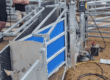
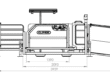
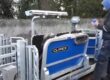
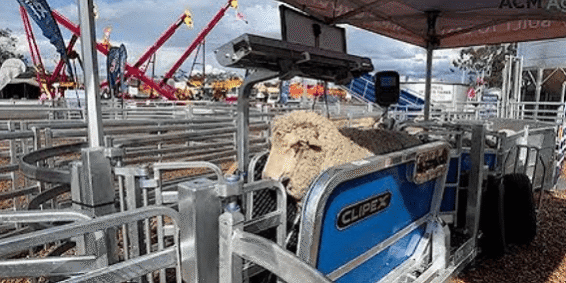
When investing in an advanced handling system like the Clipex® Automatic All-In-One Sheep Handler, one of the most significant architectural choices you must make is whether to purchase the Fixed (Stationary) Model or the Contractor (Fully Mobile) Trailer Model.
Both options deliver identical pneumatic catching speeds, automated pre-catch staging, and a full roll-over tilt table for uncompromised underbelly access. However, because the Contractor trailer model carries a higher initial capital expense to cover its legal highway chassis, integrated suspension, and synchronized electric height jacks, evaluating the concrete Return on Investment (ROI) across your specific land and labor footprint is essential.
This guide breaks down the core operational metrics, hidden cost savings, and enterprise profiles to help you determine which configuration offers the fastest path to profitability.
1. Capital Cost Structure vs. Setup Flexibility
To calculate a true ROI, you must weigh the upfront equipment costs against the infrastructure costs required to support them.
The Fixed System Realities
Lower Initial Crate Cost: The baseline cost of the stationary crate is lower because it excludes road axles, wheels, a tow-hitch, and onboard electronic leveling jacks.
Additional Infrastructure Requirements: A fixed handler cannot simply sit on dirt or gravel if you expect accurate digital weigh scale readings. To protect your load bars and secure structural longevity, you must install a level concrete pad (minimum 100mm to 150mm thick with a 25 MPa rating).
The Yard Limitation: Once anchored to your main yard, this asset is single-location only. Remote flocks must be walked or trucked back to the central hub for treatment.
The Mobile Contractor System Realities
Higher Initial Crate Cost: Incorporates a heavy-duty transport chassis, off-road independent suspension, alloy wheels, and three synchronised electric stabilisation jacks powered by a 12V system.
Zero Concrete Costs: Built to handle variable terrain. The integrated electric jacks allow you to deploy the handler directly on flat, solid ground at remote handling pens or fields without pouring concrete pads.
Multi-Site Utility: A single operator can hook the unit up to a pickup truck and legally tow an automated handling yard to multiple holdings, out-farms, or contract clients at 60 mph.
2. Calculating the Labour and Transport ROI
The primary driver of ROI for any automated sheep handling system is labour reduction. To calculate your savings, compare the operational hours spent moving sheep versus processing them.
[Fixed Yard Scenario]     = More Time Trucking Stock + Lower Crate Cost
[Contractor Mobile Unit]  = Zero Stock Trucking      + Rapid Multi-Site Deployment
The Cost of Transporting Stock
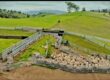
If your farming enterprise is spread across multiple blocks of rented land or separate holdings, using a fixed yard requires transporting your sheep via a livestock trailer for routine tasks like drenching, scanning, or sorting.
The Hidden Expense: Factor in fuel costs, tractor/vehicle wear, and the labour time of two workers loading, transport driving, and unloading stock.
The ROI Factor: If you process 3,000 sheep three times a year across three separate blocks of land, a mobile system that eliminates stock transport can save over 80 hours of labour annually. At an average agricultural labour rate, the mobile upgrade pays for itself in transport and time savings alone within the first 18 to 24 months.
Single-Operator Independence
Both systems eliminate the need for extra labour during heavy handling sessions. Because optical sensors handle the catching and clamping automatically, a single operator can successfully manage intensive tasks like dagging, needling, and 3-way weight sorting.
Fixed Yard Savings: Reduces your permanent yard staff requirement from three people down to one.
Mobile Yard Savings: Allows contract shearers, scanning technicians, or multi-holding managers to arrive at a remote site completely self-sufficient, turning handling into a highly profitable solo operation.
3. Enterprise Profile: Which Configuration Fits Your Farm?
Choose the Fixed Model If:
Your land is entirely contiguous, allowing all stock to be driven through permanent races back to the home farm without crossing major roads.
You already have an enclosed, secure handling building with an existing, level concrete base.
Your flock management is focused on high-throughput indoor finishing where maximum biosecurity control is maintained by keeping equipment stationary.
Choose the Contractor Mobile Model If:
You manage a split enterprise with multiple remote grazing tenancies or separate blocks of land.
You offer agricultural contracting, contract shearing, or mobile veterinary services across a regional area.
You operate on rented land where pouring permanent concrete handling structures is prohibited by the landowner.
Get the Right Engineering Layout with Farming Solutions Ltd
Choosing between mobile agility and permanent stability isn’t just a matter of price; it’s about matching your livestock equipment to your farm’s long-term business plan. At Farming Solutions Ltd, we specialise in evaluating your flock metrics, land blocks, and current labour bottlenecks to recommend the exact system configuration that maximises your output.
All Clipex automated sheep handling variants are fully eligible under the FETF 2026 Animal Health and Welfare Grant (Item: FETF72), allowing you to offset a massive portion of the capital investment.