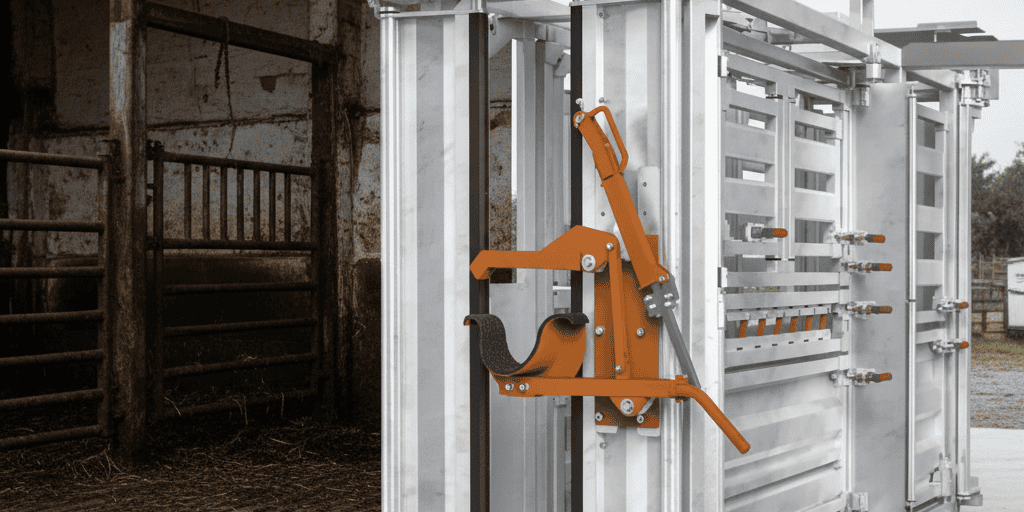
For UK livestock producers who have successfully cleared the hurdle of securing a Farming Equipment and Technology Fund (FETF) 2026 allocation, the focus now shifts from administrative compliance to physical implementation.
If you hold an approved Grant Funding Agreement (GFA) for high-specification infrastructure, such as a pneumatic cattle crush (FETF61), an automated handling system (FETF69/70), or a world-class system like the Clipex Automatic Sheep Handler- you now face the challenge of deployment.
A common misconception is that integrating advanced agricultural machinery requires bulldozing your existing farm infrastructure. In reality, the most cost-effective and efficient way to deploy your funding is by retrofitting modern, precision-engineered components into your established layout.
This in-depth guide covers the key structural, operational, and mechanical considerations for incorporating high-throughput handling assets into your existing setup without disrupting natural livestock flow.
1. Concrete Layouts: Managing Dynamic Weight and Ground Stability
The foundational step of a successful retrofit involves analyzing the surface beneath the equipment. While traditional manual crushes can operate on variable or slightly unlevel yard floors, automated and pneumatic hardware requires a highly stable platform.
For Automated Sheep Handlers
A unit like the Clipex 6-in-1 Auto Sheep Drafter or the Clipex Automatic Sheep Handler relies on highly sensitive electronic load bars to record individual animal weights accurately.
If the handler is placed on unlevel, cracked, or vibrating concrete, the weight indicators (such as the Tru-Test XR5000) will struggle to stabilise.
This slows down your throughput and compromises your electronic identification (EID) data integrity.
Ensure the designated site features a flat, level concrete pad at least 100mm to 150mm thick to eliminate frame twist and structural vibration.
For Heavy-Duty Pneumatic Cattle Crushes
Systems like the Clipex HD 1500 or HD 2000 Series Pneumatic Crush apply immense dynamic force when a beast enters the race and hits the head bail.
To prevent the unit from walking or shifting over time, it must be mechanically anchored into high-strength concrete using heavy-duty chemical resin rawlbolts.
If your existing handling yard concrete is degraded, pouring a localised, reinforced concrete pad specifically for the cattle crush section is highly recommended before delivery.
2. Managing the Flight Zone: Transitioning from Traditional Races to Modern Squeezes
Older cattle handling systems typically feature long, wide, straight-line wooden or steel races. While these were adequate for manual processing, they often create behavioral bottlenecks when directly paired with high-speed automated systems.
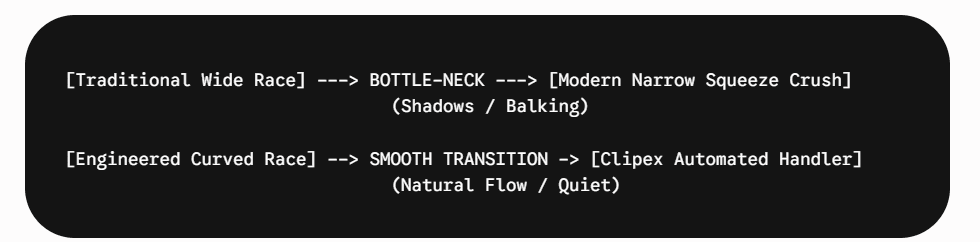
Modern infrastructure functions best when animals move smoothly, one after the other, using their natural instincts. When retrofitting, pay close attention to the transition zone between your old forcing pen and the new asset.
Race Width Adjustment: Traditional cattle races are frequently too wide, allowing younger cattle or continental breeds to turn around or wedge themselves side-by-side. If you are retrofitting a modern crush with a double squeeze mechanism, consider installing sheeted, adjustable race panels leading up to it. This keeps the animal’s vision focused straight ahead and ensures they enter the head bail cleanly.
Eliminating Visual Shadows: Automated systems operate at rapid speeds—the Clipex Sheep Handler can auto-draft up to 800 sheep per hour. However, if animals spot a sudden change in floor texture, a harsh puddle, or a dramatic shift from open hurdles to solid sheeting, they will balk. Ensure your race lining and flooring materials remain visually consistent leading right up to the intake section.
3. Integrating Power Infrastructure: Pneumatics and EID Comms
Upgrading to automated or semi-automated systems introduces utility requirements that traditional handling yards lack. You must plan for these connections well in advance of your winter installation timeline.
Compressed Air Supply (Pneumatic Systems)
If you are deploying a pneumatic double-squeeze cattle crush or an automated pneumatic sorting gate, you will need a reliable source of clean, dry compressed air.
Air Volume (CFM): Ensure your compressor meets the specific cubic feet per minute (CFM) and operating pressure (PSI) demands of the equipment under heavy use.
Moisture Filtration: Because UK winters are cold and damp, moisture condensation within airline hoses can freeze or cause internal valve corrosion. Install a high-quality filter-regulator-lubricator (FRL) unit right at the entry point of the handling yard to protect your investment.
Clean Power and EID Signal Integrity
Modern flock and herd management relies on data collection via EID stick readers and weigh scale indicators.
When retrofitting these systems into older steel barns, check for potential electromagnetic interference.
Avoid routing data cables alongside main high-voltage mains lines or close to old electric fence energisers, as this can cause read drops or false weights.
4. Livestock Flow Geometry: Optimising Return Pens and Post-Handling Layouts
A handling system is only as fast as its exit flow. A common error when retrofitting an advanced machine into an old yard layout is failing to account for how quickly animals leave the machine.
If your new automated drafter splits sheep three or five ways, but your old sorting pens only have two exit gates, you instantly create a logistical bottleneck.
Before positioning your new equipment, map out your exit geometry:
| Equipment Type | Throughput Potential | Required Layout Adjustment |
| Clipex Auto Sheep Drafter | Up to 800 sheep / hour | Requires 3 to 5 distinct, high-capacity shedding pens with wide swing gates to prevent back-up. |
| Clipex Automatic Sheep Handler | Up to 400 sheep / hour (with treatments) | Requires unobstructed access to the full-tilt table section and clear operator walking pathways. |
| Pneumatic Cattle Crush (HD2000) | Continuous high-volume flow | Requires secure, heavy-duty post-handling pens with integrated backing gates to manage treated stock safely. |
How Farming Solutions Ltd Maximises Your Retrofit Success
At Farming Solutions Ltd, we recognise that no two UK farms are identical. Every yard has its own unique layout, historic brickwork, and logistical quirks. That is why we don’t just supply premium, grant-eligible Clipex hardware, we offer a comprehensive, professional Livestock Handling System Design Service.
Led by practical engineering and real-world farming experience, our advisors work directly with your existing yard dimensions. We create custom layout blueprints that seamlessly integrate your new FETF-funded assets into your current setup, ensuring optimal animal welfare, maximum single-operator safety, and a smooth workflow.