Ground Preparation & Pad Layout for Semi-Permanent Sheep Yards
- ✓ Optimal Surface: A brushed C30/C35 concrete pad (125mm–150mm depth) with steel mesh reinforcement offers maximum hygiene, ease of cleaning, and long-term stability. A well-compacted Type 1 sub-base (150mm–200mm) is a viable, cost-effective alternative for outfield hubs.
- ✓ Drainage Gradient: Maintain a 1:50 (2%) cross-fall slope directing effluent away from race lines into a dedicated collection channel or catch-pit.
- ✓ Layout & Orientation: Position forcing tubs and V-races away from the prevailing wind and direct glare of the low rising sun to avoid stock baulking.
- ✓ Anchoring: Use heavy-duty expansion bolts or ground pin anchors through extended footplates to handle dynamic impact loads during high-volume drafting.
1. Why Ground Preparation Dictates Sheep Yard Performance
An investment in high-performance sheep handling infrastructure—such as the Clipex S400 Semi-Permanent Sheep Yard or high-throughput Clipex S650 Semi-Permanent System—delivers maximum return on investment only when built upon a stable, well-drained foundation.
Poor ground prep leads to rutting, standing water, mud accumulation, and structural shift in race lines. These factors directly cause animal baulking, compromise EID tag reader accuracy, increase foot-rot risks, and slow down processing speeds. Correct ground prep ensures single-operator efficiency and equipment longevity, key factors covered in our full suite of agricultural equipment buyers guides.
2. Site Selection: Strategic Positioning & Environmental Factors
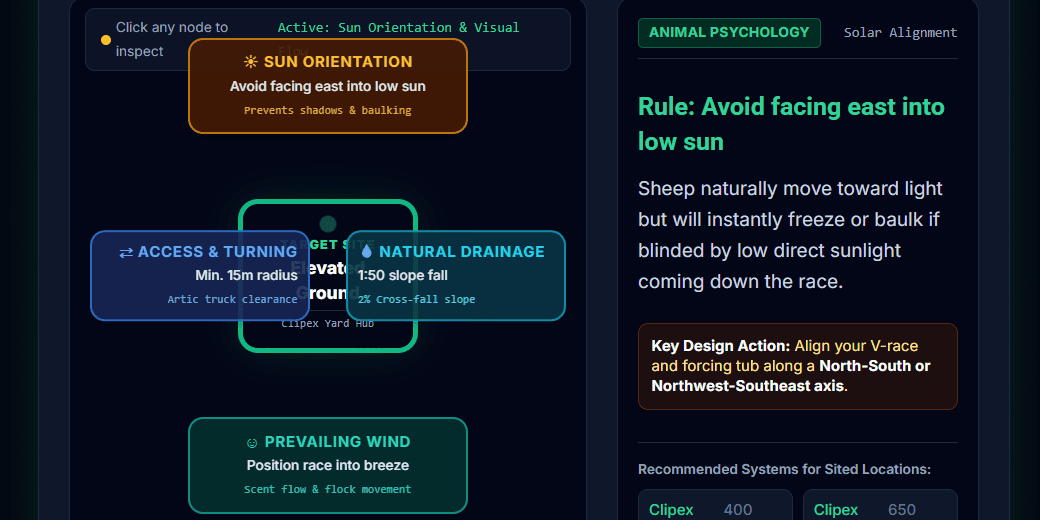
Before ground is broken or concrete is poured, evaluate four critical site selection criteria using the interactive planner below:
Animal Behaviour & Solar Orientation
Sheep naturally move from dark or shaded areas into well-lit spaces, but they will instantly baulk if forced to walk directly into low, blinding sunlight.
- Rule: Align your V-race and drafting module north-south or north-west where possible. Avoid pointing forcing tubs directly east toward early-morning rising sun or west toward late-afternoon setting sun.
- Flow Integration: To prevent pressure spikes and erratic stock movement during entry, apply the behavioural flow rules in our guide on how to fix sheep yard flow on UK farms.
3. Surface Specifications: Concrete Pad vs. Compacted Hardcore
Choosing between concrete and hardcore depends on farm tenure, budget, and whether the installation is a central home hub or a semi-permanent outfield facility.
| Specification Feature | Brushed Concrete Pad (Recommended) | Compacted Type 1 Hardcore Pad |
|---|---|---|
| Best For | Central home yards, high-throughput commercial flocks | Seasonal outfield hubs, tenanted land |
| Slab / Layer Depth | 125mm – 150mm (C30/C35 readymix) | 150mm – 250mm compacted Type 1 / MOT |
| Sub-Base Layer | 150mm compacted scalpings + blinding sand | Geotextile membrane + crushed stone aggregate |
| Surface Finish | Tampered / wood-float brushed finish | Rolled dolomite or limestone dust top layer |
| Hygiene & Washdown | Excellent: Pressure washer safe, chemical resistant | Moderate: Scraping only; prone to weed growth |
| Anchoring Method | Heavy-duty M12/M16 sleeve anchors / resin studs | Drive-in ground pins / extended footplate stakes |
4. Yard Drainage & Ground Anchoring for Clipex Systems
Standing water and slurry accumulation in drafting races disrupt animal flow, obscure ground contrast, and increase disease transmission. Maintain a minimum 1:50 (2%) fall across the pad length and position slot drains across the entry to the drenching race.
Anchoring Methods for Semi-Permanent Systems
Semi-Permanent systems like the Clipex S400 and S650 are engineered to offer the rigidity of a fixed yard with the flexibility to relocate if farm leases change. Proper anchoring prevents panel drift during intensive processing:
- Concrete Pad Fixings: Drill into the concrete pad through pre-punched holes in the Clipex post footplates. Secure using M12 x 100mm mechanical expansion anchors or stainless steel resin studs.
- Hardcore & Turf Fixings: Drive 16mm x 600mm heavy-duty ribbed rebar pins diagonally through footplate mounting holes into the sub-grade.
5. Integrating Handling Equipment & Precision Automation
When integrating automated crates—such as the Clipex 6-in-1 Auto-Drafter—ensure pneumatic air lines and power cables are protected in recessed ground conduits. If choosing between manual treatment options and automated sorting crates, review our comparison on sheep handlers vs auto drafters.
For detailed advice on configuring single-operator controls and remote drafting, consult our guide on designing handling systems for one-person operation and our livestock EID buyers guide.
6. Frequently Asked Questions (AEO & Voice Search)
Q: Can I install a semi-permanent sheep yard on bare soil or turf?
While possible for short-term temporary setups, installing a semi-permanent yard like the Clipex S400 on bare turf leads to severe rutting, mud accumulation, and ground instability during wet periods. A minimum sub-base of 150mm compacted Type 1 hardcore with a rolled stone-dust surface is strongly recommended.
Q: How thick should a concrete pad be for a semi-permanent sheep handling yard?
A concrete pad for a sheep handling yard should be 125mm to 150mm thick, using a C30/C35 strength mix reinforced with A252 steel mesh. This handles point loads from crowded pens, tractor scrapers, and heavy handling equipment.
Q: What slope gradient is required for sheep yard pad drainage?
A slope gradient of 1:50 (2%) is optimal. This allows surface water, urine, and washdown slurry to drain off effectively toward collection channels without creating a steep slope that destabilizes sheep or operators.
Ready to Design Your Semi-Permanent Sheep Yard?
Explore equipment choices in our dedicated sheep handler buyers guide or speak with our CAD yard design team for technical site planning assistance.
Contact Alan Hughes & The Design Team