On-Farm Biosecurity: Designing Effective Isolation Housing & Quarantine Pens
Cattle isolation housing: Bovine TB – Managing livestock movements is a critical line of defense against Bovine Tuberculosis (bTB). Unscreened, newly purchased stock or animals returning from shared grazing can unwittingly introduce Mycobacterium bovis (M. bovis) into a clean herd.
Following our recommendations on physical barriers (Part 2: Wildlife Barrier Guide) and cleaning protocols (Part 3: Disinfection Protocols), this guide details how to build and operate an effective isolation facility for brought-in stock and reactor animals.
Why Isolation Housing is Essential for bTB Control
M. bovis is primarily transmitted via aerosol droplets when cattle are in close proximity. Direct nose-to-nose contact, shared airspace, and contaminated feeding or watering equipment create high-transmission risks.
Isolating high-risk or newly introduced cattle physically isolates potential infection, preventing farm-wide herd breakdowns.
1. Location & Airspace Separation Requirements
A compliant quarantine or isolation facility must be physically isolated from the main livestock housing.
Dedicated Airspace: Isolation pens must NOT share an airspace with main herd housing. Exhaust air or shared ventilation from quarantine pens can carry aerosolised pathogens directly to healthy stock.
Separation Distance: Position isolation units as far from main stock yards as practically possible, with a recommended boundary buffer.
Drainage Control: Quarantine building effluent, slurry, and bedded waste must drain away from main livestock yards, pastures, and freshwater sources.
2. Building Standards & Physical Containment
Isolation buildings require high-level physical containment to prevent contact with both main herd stock and wildlife vectors.
Pen Construction & Layout
Solid Partitions: Use smooth, non-porous, solid concrete walls or plastic boarding up to 1.5 meters high to eliminate nose-to-nose contact between isolated animals and neighbouring pens.
Sheeted Doors & Gates: Exterior gates and doors must be sheeted to 1.5 meters to prevent wild mammals, such as badgers, from entering the quarantine zone.
Gap Controls: Keep all ground-level clearance gaps beneath gates and doors under 7.5 cm (3 inches) to block wildlife entry.
Dedicated Feeding & Watering Infrastructure
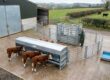
Individual Feeders: Do not share feed equipment or forage between isolated cattle and the main herd. Using dedicated feed block holders like the TB Buster keeps supplements raised off the floor and badger-proof within isolation units.
Water Supply Security: Equip isolation pens with raised water troughs elevated above 84 cm (33 inches) featuring smooth sides. Never allow quarantine overflow water to drain across main yard walkways.
3. Safe Handling Infrastructure within Isolation Units
Handling potentially high-risk or reactor cattle safely requires purpose-built equipment that protects stock handlers and veterinary personnel.
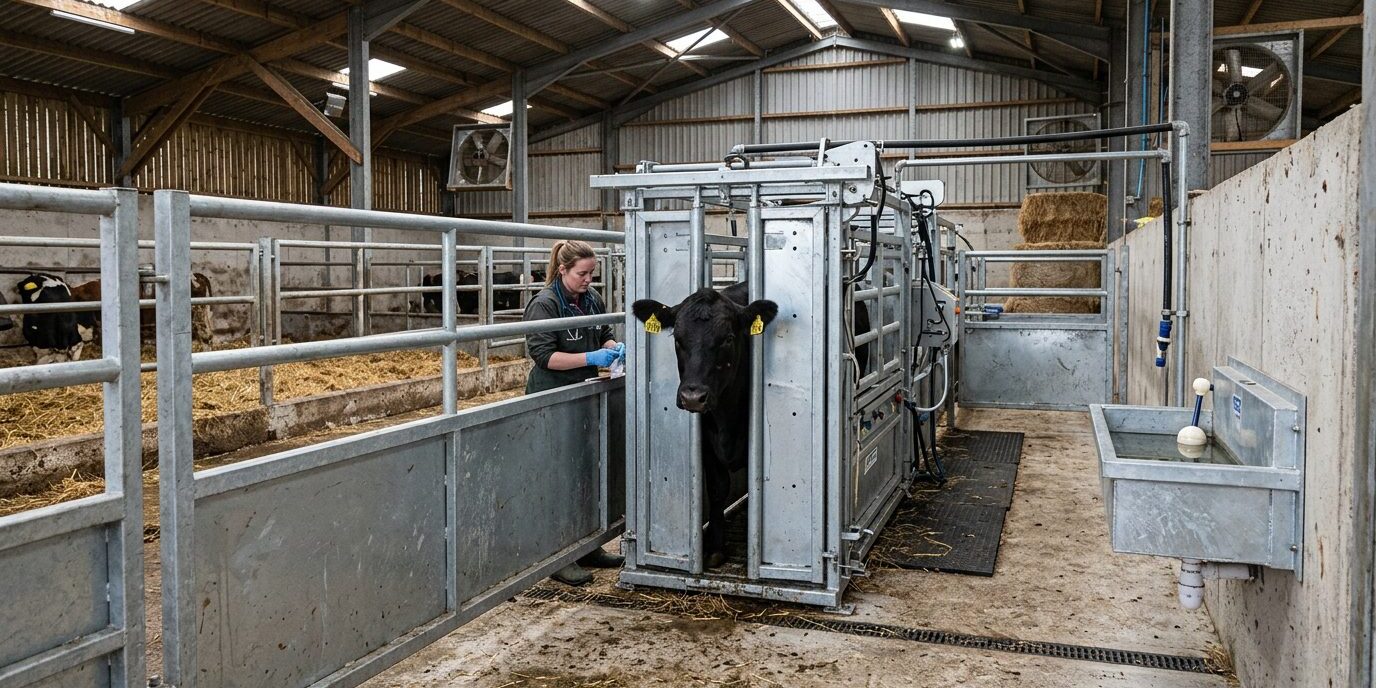
Integrated Safe Handling: Quarantine units should feature an integrated race and cattle crush so animals can be restrained, tested, or treated without leaving the isolated airspace.
Heavy-Duty Equipment: Utilising robust, easy-to-sanitise equipment such as specialised TB Testing Cattle Crushes allows safe restraint for veterinary procedures while enduring strict post-isolation chemical washdowns.
4. Operational Protocols for Quarantine Pens
Having a dedicated facility is only effective if strict management protocols are followed daily.
Sequence of Care: Always feed, handle, and tend to main herd cattle first, leaving isolated or quarantined animals until the end of the day.
Dedicated PPE: Store dedicated waterproof clothing, boots, and gloves directly inside the isolation unit. Do not wear this gear back into main livestock housing.
Disinfection Entry Points: Maintain footbaths filled with fresh DEFRA-approved TB disinfectant at all entry and exit doors.
Isolation Facility Checklist
| Feature | Standard Requirement | Recommended Equipment / Action |
| Airspace | Completely separate building / no shared ventilation | Standalone housing layout |
| Boundaries | Solid walls & sheeted gates to 1.5m height | Non-porous concrete/plastic panels |
| Supplements | Elevated mineral block storage off pen floors | TB Buster |
| Calf Creep | Protected youngstock feeding within quarantine | Universal Creep Feeder |
| Handling | Secure restraint for testing & veterinary visits | TB Testing Cattle Crushes |
Build a Comprehensive On-Farm Biosecurity Plan
Isolation facilities complete your physical biosecurity framework. Review the entire series to ensure every angle of your holding is protected:
Read Part 1: On-Farm Bovine TB Risk Assessment Checklist
Read Part 2: Wildlife Barrier & Deterrent Infrastructure Guide
Read Part 3: DEFRA-Approved Disinfection Protocols & Vehicle Washdown Setup
Contact Alan for Bespoke Yard Layout Design: 07890 325264
Complete Farm Equipment Buyer’s Resources
Upgrading your farm infrastructure is one of the most effective long-term investments in disease control and operational safety. Explore our full library of equipment selection resources:
Browse our Bovine TB Management Buyer’s Guide and our full directory of Agricultural Equipment Buyer’s Guides, including Sheep Handler Buyer’s Guide, Cattle Crush Buyer’s Guide & Livestock EID Buyer’s Guide.
Discover our core range of high-performance Livestock Handling products tailored for modern UK livestock farms.
Read the latest industry guidance in our Bovine TB Prevention Category.
Featured TB Prevention Topics & Insights
Biosecurity requires continuous adaptation based on your farm’s risk profile and surrounding wildlife activity. For detailed advice on specific preventive measures, read through our latest insights:
How Youngstock Management Reduces TB Transmission Risk: Protecting young stock and calves from early-life wildlife exposure and shared feed contamination.
The Role of Handling Systems in TB Control: How efficient restraint infrastructure speeds up routine veterinary testing and enables safer isolation.
Practical Ways to Reduce TB Risk in Cattle Handling Areas: Practical layout adjustments to keep feeding and handling zones clean and badger-proof.
The Role of EID & Weighing in TB Monitoring: Using RFID data tracking and weigh indicators to monitor herd health and maintain accurate compliance records.
On-Farm TB Prevention: What Are the Most Effective Measures? A comprehensive guide to biosecurity practices, badger exclusion, and clean feeding systems.