Securing Your Farm: Effective Wildlife Barriers for Bovine TB Deterrence
Bovine Tuberculosis (bTB) transmission isn’t limited to direct cattle contact; environmental contamination via wildlife vectors is a major risk factor. Badgers and other wild mammals can harbour and spread M. bovis, contaminating feed, water, and grazing land. The previous post outlined the fundamental risk vectors (audit your farm: Bovine TB Risk Assessment); now, we focus on establishing robust wildlife barriers and deterrent infrastructure as the cornerstone of your on-farm biosecurity plan.
Understanding the Wildlife Challenge
In the UK, badgers are a primary wildlife reservoir for bTB. They are strong, agile, and opportunistic, capable of accessing unsecured feed stores, climbing standard fences, and contaminating livestock drinking sources. Effective deterrents must physically exclude them from critical farm areas and reduce environmental bacterial persistence.
1. Feed Store & Trough Protection: The First Line of Defense
Feed is a magnet for wildlife. Contaminated feed is a potent respiratory and oral transmission route for cattle.
Securing Concentrate Stores
All bulk grain stores, concentrate bins, and silage clamps must be completely wild-animal-proof.
Sealed Buildings: Use solid doors that fit tightly. Repair any damage to walls, roofs, or foundations that could provide entry points.
Elevated Storage: Where possible, store bagged feed off the ground. Keep bulk feed inside secured buildings.
Protecting Outdoor Feed Troughs
Standard outdoor feeding equipment often fails to exclude wild mammals. Badgers can easily climb into conventional creep feeders, defecating and urinating directly onto feed intended for calves.
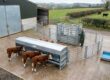
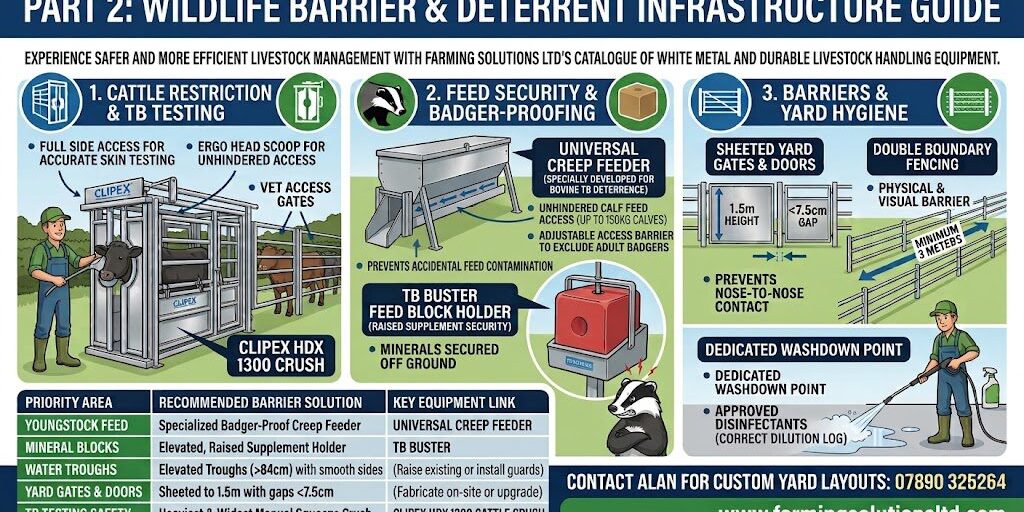
Specialist Badger-Proof Creep Feeders: Upgrade to equipment designed specifically to stop badgers. The Universal Creep Feeder for TB Prevention features specialised access barriers that keep badgers out while allowing unhindered feed access for calves.
Trough Elevation: For main herd troughs, consider elevated designs with smooth, vertical sides that make climbing difficult.
2. Mineral Supplement & Water Source Security
Environmental persistence of M. bovis is high in moist areas like water troughs, and concentrated licks pose a high-frequency direct transmission risk.
Mineral Lick & Feed Block Security
Mineral supplements and feed blocks are a concentrated attraction for both cattle and badgers. Leaving them on the ground or in low holders allows easy contamination.
Elevated Block Holders: Use purpose-built holders that keep feed blocks elevated and badger-proof. The TB Buster is an effective, raised supplement holder that physically prevents badger access to vital mineral blocks.
Badger-Proofing Water Sources
Badger latrines and runlines often concentrate around water sources, creating high-risk contamination zones. Respiratory transmission is high around shared drinking areas.
Trough Elevation: Water troughs should be elevated to a minimum height of 84 cm (33 inches).
Smooth Vertical Sides: Combine elevation with smooth, vertical sides, or utilise specialised barrier guards to prevent badger access to the drinking water. Roller guards are often highly effective.
3. Farm Yard & Building Security
Securing the central farm yard reduces wildlife movement through areas with high cattle density and feed handling.
Sheeted Gates and Doors: All farmyard gates and building entry doors must be sheeted to a height of 1.5 meters to provide an impassable visual and physical barrier.
Keep Gaps Small: Ensure gaps under doors and gates are kept strictly below 7.5 cm (3 inches).
Yard Drainage: Manage yard run-off effectively, ensuring water contaminated by feces and urine flows away from central areas and grazing land. (Cleansing protocols are covered in our upcoming guide on DEFRA-Approved Disinfection Protocols).
4. Double Boundary Fencing: Nose-to-Nose Prevention
Protecting your herd from nose-to-nose contact with neighbouring cattle is vital for reducing respiratory transmission risk.
Nose-to-Nose Contact: Ensure a minimum gap of 3 meters between your boundary fence and neighbouring cattle pastures. Double-fencing provides a robust physical separation.
Hedge Management: Hedges should be stock-proof and free from gaps to prevent cattle on shared boundaries from making direct contact.
| Priority Area | Recommended Barrier Solution | Key Equipment Link |
| Youngstock Feed | Specialised Badger-Proof Creep Feeder | Universal Creep Feeder |
| Mineral Blocks | Elevated, Raised Supplement Holder | TB Buster |
| Water Troughs | Elevated Troughs (>84cm) with smooth sides | (Raise existing or install guards) |
| Yard Gates & Doors | Sheeted to 1.5m with gaps <7.5cm | (Fabricate on-site or upgrade) |
| TB Testing Safety | Heaviest & Widest Manual Squeeze Crush | Clipex HDX 1300 Cattle Crush |
Continuous Improvement for On-Farm Biosecurity
Establishing physical barriers is a fundamental step. Continue to refine your complete strategy by exploring the next guides in our series:
Audit Your Risk: Read Part 1: On-Farm Bovine TB Risk Assessment Checklist
Read Part 3: DEFRA-Approved Disinfection Protocols & Vehicle Washdown Setup
Read Part 4: Setting Up Isolation Housing & Quarantine Pens
Contact Alan for Bespoke Yard Layout Design: 07890 325264
Featured TB Prevention Topics & Insights
Biosecurity requires continuous adaptation based on your farm’s risk profile and surrounding wildlife activity. For detailed advice on specific preventive measures, read through our latest insights:
How Youngstock Management Reduces TB Transmission Risk: Protecting young stock and calves from early-life wildlife exposure and shared feed contamination.
The Role of Handling Systems in TB Control: How efficient restraint infrastructure speeds up routine veterinary testing and enables safer isolation.
Practical Ways to Reduce TB Risk in Cattle Handling Areas: Practical layout adjustments to keep feeding and handling zones clean and badger-proof.
The Role of EID & Weighing in TB Monitoring: Using RFID data tracking and weigh indicators to monitor herd health and maintain accurate compliance records.
On-Farm TB Prevention: What Are the Most Effective Measures? A comprehensive guide to biosecurity practices, badger exclusion, and clean feeding systems.
Complete Farm Equipment Buyer’s Resources
Upgrading your farm infrastructure is one of the most effective long-term investments in disease control and operational safety. Explore our full library of equipment selection resources:
Browse our Bovine TB Management Buyer’s Guide and our full directory of Agricultural Equipment Buyer’s Guides, including Sheep Handler Buyer’s Guide, Cattle Crush Buyer’s Guide & Livestock EID Buyers Guide.
Discover our core range of high-performance Livestock Handling products tailored for modern UK livestock farms.
Read the latest industry guidance in our Bovine TB Prevention Category.