
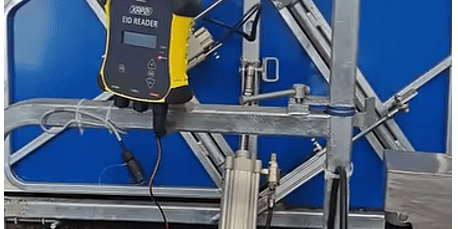
Stick Readers vs. Panel Readers
Stick Readers vs. Panel Readers – Investing in an Electronic Identification (EID) infrastructure is the single most effective way to transform your livestock enterprise from a game of averages into a precision-managed, data-driven business.
However, when transitioning away from manual record-keeping, one of the first major architectural decisions you must face is selecting your primary data capture tool.
In the livestock sector, this choice comes down to a fundamental comparison: Handheld Stick Readers vs. Panel Readers, also known as Fixed Race Panel Antennas.
While both systems serve the same core purpose-capturing the unique 15-digit ISO-compliant transponder code embedded inside a sheep or cattle ear tag-their operational workflows, read ranges, and labour dynamics are completely different. Selecting the wrong hardware tier for your livestock handling setup will quickly create data-capture bottlenecks and restrict your operational throughput.
This Stick Readers vs. Panel Readers guide breaks down the technical engineering specifications, workflow realities, and investment metrics to help you choose the right data capture tool for your yard.
1. The Data Capture Selection Matrix
Use this quick-reference matrix to see how handheld stick readers and fixed panel readers compare across key operational benchmarks.
| Feature / Metric | Handheld Stick Readers (e.g., Tru-Test XRS2i / SRS2i) | Fixed Race Panel Antennas (e.g., Gallagher / Tru-Test Panels) |
| Primary Operational Style | Mobile, manual scanning by a roving operator. | Stationary, automated scanning as stock flows through a race. |
| Typical Physical Weight | Lightweight and balanced (600g to 900g). | Heavy-duty industrial chassis (9kg to 12kg). |
| Read Range Capacity | Short-range proximity scanning (20cm to 35cm from wand tip). | High-sweep wide range (up to 1.0m to 1.2m across a race width). |
| Power Source Requirements | Internal rechargeable lithium-ion battery. | External 12V deep-cycle battery or mains power supply. |
| Optimal Use Cases | Pen-work, scanning newborn stock, individual medical dosing. | High-speed automated drafting, rapid weigh-race tracking. |
| Throughput Potential | Dependent on manual operator speed. | Hands-free capture matching maximum mechanical gate speed. |
2. Handheld Stick Readers: Mobile Versatility
Handheld stick readers are the versatile “Swiss Army knives” of livestock data collection. They are designed for maximum portability, allowing a single operator to carry a full database of animal histories directly into a pen, trailer, or remote field holding.
Ergonomics and Portable Engineering
Premium EID stick readers are engineered to balance rugged durability with operator comfort. Weighing between 600g and 900g, they feature optimised weight distribution to minimise wrist fatigue during intensive, hours-long scanning sessions.
Safe Reaching Distance: Shaft lengths range from 450mm to 650mm. This structural length is a critical safety feature, allowing you to easily read tags on large cattle inside a head bale or fractious sheep inside a forcing pen without placing your hands or arms in a hazardous crushing zone.
Environmental Protection: Handheld units require a minimum IP67 Ingress Protection rating, meaning the internal electronics are completely dust-tight and can survive being dropped directly into mud, slurry, or submerged in up to 1 meter of water.
The Stick Reader Workflow
Stick readers are highly efficient when you need to interact with specific animals individually rather than processing massive lines of stock at speed. They excel at recording birth traits next to a calving pen, scanning a sick animal to check its medical withdrawal history before administering a dose, or taking manual inventory during stock arrivals.
However, because they require an operator to manually target the animal’s ear within a close 20cm to 35cm range, they inherently limit your processing speed when managing high-throughput races.
3. Fixed Race Panel Antennas: High-Throughput Automation
When your enterprise scales up to intensive sorting, weighing, and high-frequency selection, manual stick readers quickly become a bottleneck. This is where a fixed Race Panel Reader becomes mandatory.
High-Sweep Read Range
Unlike stick wands, which require precise aiming, a fixed race panel creates a wide, invisible radio frequency detection curtain across your entire handling race.
Massive Scanning Sweep: Large-scale commercial panel readers (often measuring around 1300 x 600mm) project a powerful, continuous read field extending up to 1.0m to 1.2m across the width of the race.
Hands-Free Operation: As long as the animal walks through the race, its ear tag will enter this massive electronic zone and be scanned instantly. This eliminates the need for an operator to stand over the race with a wand, unlocking completely hands-free, automated data capture.
Rugged Structural Engineering
Fixed panel readers are built to withstand immense physical punishment. They feature heavy-gauge, UV-stabilised polycarbonate shells designed to deflect direct impacts from charging cattle or crowded sheep. Weighing between 9kg and 12kg, these panels are structurally bolted to the exterior framing of a cattle crush or a sheep drafting race.
Power & Performance: To maintain such a large and reliable read field, panel antennas demand stable, continuous power. They are typically wired directly to a mains electricity supply or hooked up to an external 12V deep-cycle battery network, making them ideal for permanent yard installations.
4. Architectural Coexistence: Eliminating Steel Interference
Whether you select a mobile stick reader or a fixed panel antenna, both technologies rely on Low-Frequency (LF) radio waves to function. A critical technical reality that every farmer must understand is that bare steel warps radio signals.
If you mount an EID panel reader directly against the bare galvanized steel frame of a sheep handler or cattle crush, the metal will deflect the radio waves, causing severe signal distortion (Electromagnetic Interference), dropped tag reads, and sluggish gate performance.
The Panel Isolation Rule: Fixed antenna panels must always be mounted using specialised, non-metallic isolation brackets (such as high-density polyethylene spacers or marine plywood backings) to separate the active face of the reader from bare iron or steel.
The Stick Wand Rule: When scanning animals inside a heavy steel crush with a handheld stick reader, avoid resting the wand tip directly against the metal bars while scanning, as this temporarily dampens the read range.
5. Which Tool Fits Your Enterprise Profile?
Choose a Handheld Stick Reader If:
You operate a small-to-medium enterprise where flexibility across multiple locations is prioritised over blistering speed.
Your primary data collection happens during pen work, scanning newborn stock in fields, or during individual veterinary assessments.
You need a highly portable unit that can quickly sync via Bluetooth directly to a mobile smartphone app anywhere on the farm.
Choose a Fixed Race Panel Antenna If:
You run a high-throughput enterprise (such as a commercial lamb finishing unit or large beef backgrounding operation) where processing hundreds of animals per hour is the norm.
You are integrating your EID setup with an automated pneumatic drafting system (like a Clipex Auto Drafter) to allow automated, weight-based sorting without human intervention.
You are setting up a permanent, central handling hub with access to dedicated mains power or a robust 12V battery utility bank.
Frequently Asked Questions (FAQ)
Why is my EID reader dropping tag reads when mounted to my metal race?
This is almost always caused by Electromagnetic Interference (EMI). Heavy-gauge galvanised steel deflects and warps low-frequency radio waves. If your fixed antenna is bolted directly to a metal frame without non-metallic isolation brackets, its scanning sweep will distort significantly. For a full diagnostic checklist and step-by-step isolation methods, read our troubleshooting guide on Electromagnetic Interference (EMI): Diagnosing and Fixing EID Signal Dropouts.
How do handheld stick readers perform during freezing UK winters?
Extreme cold significantly degrades standard lithium-ion battery discharge efficiency, which can temporarily reduce your operating runtime in sub-zero yard conditions. While industrial stick readers carry an IP67 weather rating, keeping internal components protected from extreme temperature drops is vital to prevent mid-session power cuts.
Discover our seasonal maintenance protocols in Batteries, Power, and Cold Weather: Protecting Yard Electronics in Sub-Zero Conditions.
Can I use an entry-level stick reader to run an automated drafting gate?
No. Entry-level stick readers lack the continuous high-speed data output and extended read range required to communicate instantly with automated pneumatic machinery. High-throughput sorting environments require a dedicated computing brain capable of controlling physical air valves based on incoming data streams.
To see how these computing tiers differ, review our hardware guide: Weigh Scale Indicators: The Brains of Your EID Setup (Tiers Explained).
Do fixed panel readers comply with upcoming UK livestock regulations?
Yes. Both premium handheld stick readers and fixed panel antennas are fully compliant with ISO 11784/11785 standards, meaning they reliably capture both HDX and FDX-B electronic tags. Implementing this hardware now ensures your farm infrastructure is fully prepared for upcoming electronic reporting mandates.
Review the key compliance deadlines and cross-compliance checklists by reading The 2027 UK Cattle EID Mandate Checklist.



1 Comment