
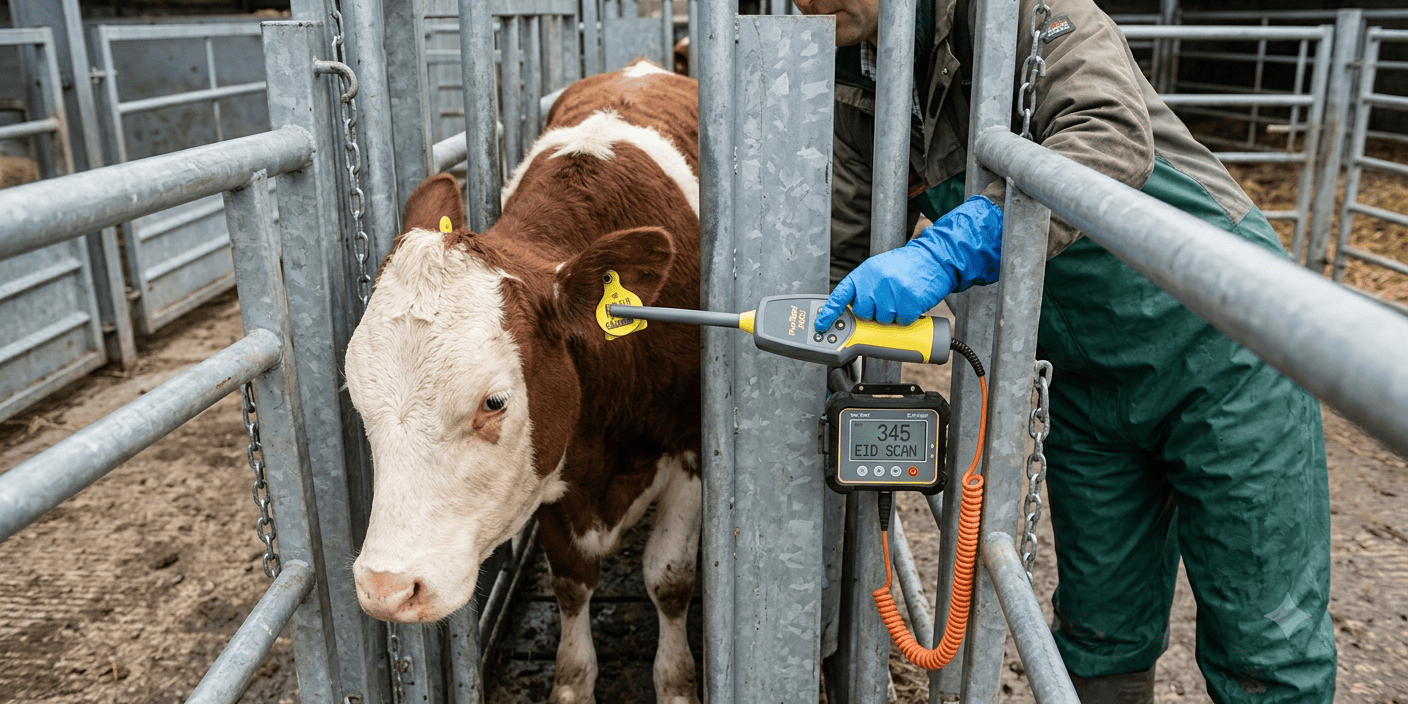
UK cattle EID mandate checklist
UK cattle EID mandate checklist – The livestock sector is fast approaching its biggest digital operational shift in decades. With the upcoming rollout of the 2027 UK Cattle Electronic Identification (EID) Mandate, manual passport handling, paper movement tracking, and handwriting-based ear tag recording are officially being phased out.
For progressive beef and dairy enterprises, mandatory EID is more than just regulatory compliance; it is an opportunity to digitise your yard, streamline weighing workflows, and eliminate human error.
However, leaving your hardware upgrades until the absolute deadline will leave you facing equipment shortages, setup delays, and operational downtime.
This comprehensive readiness checklist outlines the regulatory requirements, hardware tiers, and technical steps you must take to ensure your farm infrastructure is 100% compliant before the mandate takes effect.
1. Regulatory Deadlines & Compliance Overview
Understanding what the law requires is the foundation of your hardware investment. The 2027 mandate transitions all national bovine registration and tracking from paper-based systems to low-frequency digital scanning. Our UK cattle EID mandate checklist will help you meet regulations.
What Changes Under the Mandate?
Dual Tagging Requirements: All calves born after the enforcement date must be fitted with an official EID tag pairing (typically a conventional tag in one ear and an electronic transponder tag in the other).
Movement Deadlines: Paper passports will be replaced by centralised digital database reporting. Animals moving off-farm to markets, abattoirs, or secondary holdings must be electronically scanned and logged.
ISO 11784 / 11785 Compliance: All tags and EID readers deployed on your farm must operate on approved standard low-frequency protocols (handling both HDX and FDX-B tag architecture).
2. Infrastructure Readiness Checklist
To transition your enterprise without disrupting your daily handling routines, work through this step-by-step infrastructure checklist:
Step 1: Audit Your Current Yard Layout & Power
Before buying EID wands or indicators, assess your handling footprint:
Mobile Field Operations: If you scan newborn calves or handle stock in outlying pens, prioritise portable hardware with long-life rechargeable lithium-ion batteries.
Central Handling Hubs: If you process high volumes of stock through a central race, ensure your cattle crush area has access to a dedicated 12V power supply or mains outlet to support high-throughput readers.
Learn more about preserving battery life during sub-zero operations in our guide on Protecting Yard Electronics in Sub-Zero Conditions.
Step 2: Select Your Primary Data Capture Hardware
Choose the reader hardware that matches your enterprise scale:
Handheld Stick Readers: Essential for flexible pen-work, medical dosing, and individual animal selection.
Fixed Race Antenna Panels: Essential for hands-free, high-speed sorting, weighing, and race movement.
Not sure which hardware fits your handling style? Read our breakdown: Stick Readers vs. Panel Readers: Choosing the Right Data Capture Tool.
Step 3: Eliminate Electromagnetic Interference (EMI)
Metal race frames distorted by low-frequency signals can cause dropped tag reads and freeze your data collection mid-session.
Ensure all panel antennas are installed with non-metallic isolation spacers.
Test your scan zones around cattle crushes, head bales, and metal gates.
Encountering read errors? Diagnostic procedures can be found in Diagnosing and Fixing EID Signal Dropouts.
Step 4: Upgrade Your Indicator & Software Tier
Capturing a 15-digit EID number is only half the battle; you must store and process that data:
Pair your reader with a compatible weigh scale indicator to instantly link animal tag IDs to live daily live weight gains (DLWG) and breeding histories.
Ensure your software automatically exports compliant movement files directly to national databases.
Explore hardware options in Weigh Scale Indicators: The Brains of Your EID Setup.
Step 5: High-Throughput Automation (Optional Upgrade)
For commercial finishing units handling hundreds of head per hour, integrate your EID scanning directly into automated handling systems. Automated drafting gates read the EID tag, check target weights, and sort stock automatically without manual gate work.
See how automated race systems transform productivity in our Sheep Handler EID Integration Guide and Mobile vs Fixed Sheep Yards: Calculating ROI.
Frequently Asked Questions (FAQ)
Will my existing EID stick reader work with the new cattle tags?
As long as your stick reader is ISO 11784/11785 compliant and capable of reading both FDX-B and HDX frequencies (such as the Tru-Test XRS2i or SRS2 series), it will read all official UK cattle EID tags.
Can I run an automated drafting race directly from an entry-level EID stick reader?
No. Basic stick readers record data for manual viewing, but high-speed automated drafting requires continuous data streaming and dedicated output relays. You will need a fixed panel antenna linked to an advanced computing indicator to run automated pneumatic sorting equipment like Clipex drafters.
What happens if an EID tag fails or drops out in the crush?
Regulatory compliance requires re-tagging and updating the animal’s electronic record within specified timeframes. Having an EID reader paired directly with your indicator allows you to seamlessly cross-reference old ear tags against historical weight records to confirm an animal’s identity before issuing a replacement.

2 Comments