Semi-Permanent vs. Fixed Steel Cattle Yard
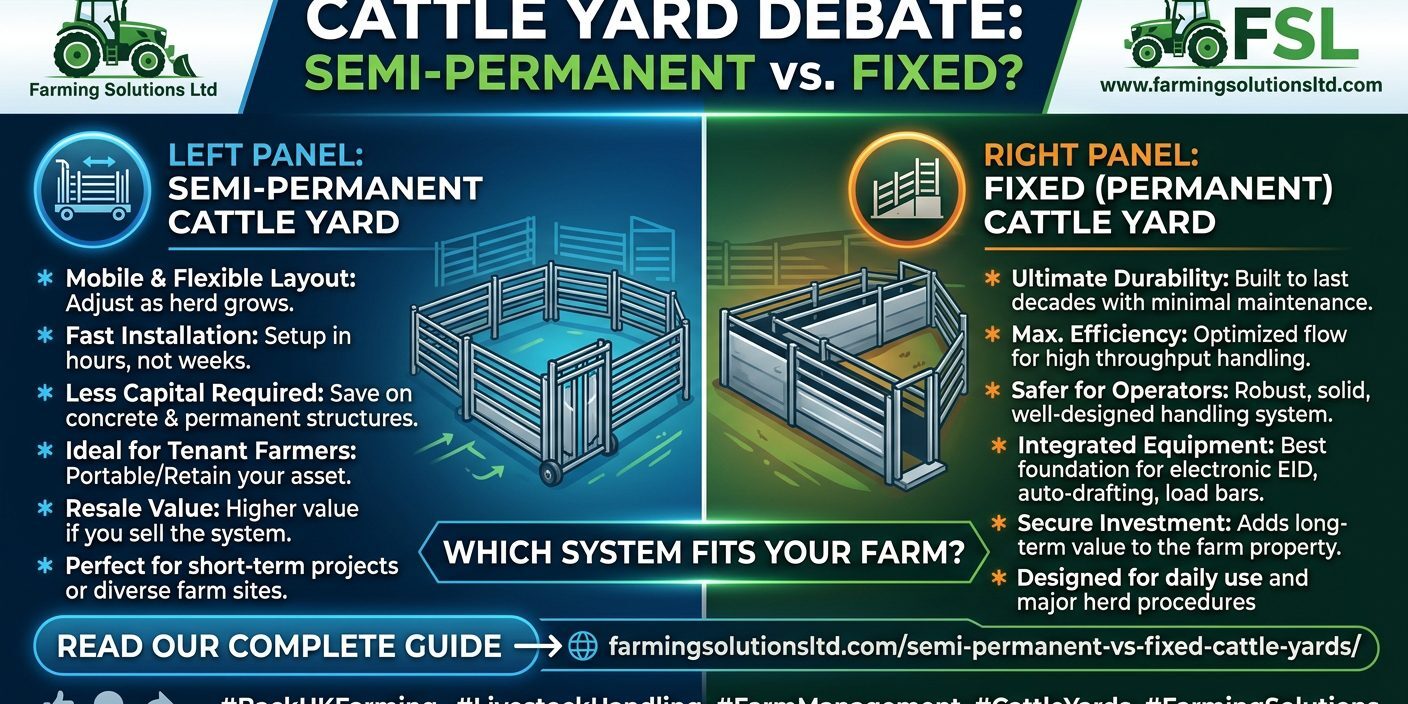
Semi-Permanent vs. Fixed Steel Cattle Yard – Designing a cattle yard is a major capital investment. Choosing between a semi-permanent modular yard and a fixed concrete-and-steel infrastructure determines how easily your yard can adapt to changes in herd sizes, tenancy agreements, and operational workflows.
1. Architectural & Structural Overview
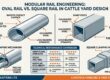
Semi-Permanent Systems: Built from heavy-duty, high-tensile steel oval or square rail panels connected by heavy drop pins and joiner brackets. They require minimal ground anchoring and can be modified, expanded, or relocated.
Fixed Infrastructure: Built using heavy RSJ upright posts or thick-walled circular hollow sections (CHS), concrete-encased directly into footings or bolted via chem-anchored baseplates to a slab.
2. Side-by-Side Comparison
| Feature | Semi-Permanent Yard | Fixed Concrete & Steel Yard |
| Ground Preparation | Compacted hardcore base or crushed stone | Reinforced 125mm+ concrete pad (25–30 MPa) |
| Installation Time | 1 to 2 days | 1 to 3 weeks (includes concrete cure time) |
| Tenancy Suitability | Ideal for tenant farmers; fully demountable | Best for owner-occupiers or long-term sites |
| Adaptability | Reconfigurable anytime as herd needs evolve | Static layout; requires cutting/welding to alter |
| Structural Rigidity | High flexibility; absorbs heavy stock impact | Maximum rigidity; zero flex under pressure |
3. Civil Works & Groundwork Requirements
Hardcore Preparation for Modular Yards
For semi-permanent yards (such as the PC600 Modular Yard System), a minimum 150mm bed of compacted MOT Type 1 hardcore is recommended. In high-impact pressure zones (such as entryways or forcing tubs), drop-pins should be secured into cast concrete sockets or ground sleeves set flush with the surface.
Concrete Specifications for Fixed Yards
Fixed yards require concrete capable of withstanding heavy axle loads, animal waste, and high lateral force:
Pad Thickness: 125mm to 150mm minimum.
Concrete Grade: C35/C40 (35–40 MPa compressive strength) with fiber or A252 steel mesh reinforcement.
Surface Finish: Tamper-finished or diamond-grooved to provide slip resistance for cattle.
Drainage Gradient: Minimum 1:60 fall towards a channel or effluent collection tank.
Further Reading in Livestock Handling & Yard Design
Building a safe, high-throughput handling facility requires balancing animal behavior, structural engineering, and digital technology. Explore our complete guide archives across the Livestock Handling & Yard Design category for detailed breakdowns on yard layouts, grant eligibility, and single-operator safety.
Yard Layout & System Design
Designing a Handling System for Mixed Beef and Dairy Enterprises
Calf Pen Design: The Ultimate Guide to Safer, Low-Stress Care
Cattle Crushes & Solo-Operator Safety
EID Tech, Grants & Economics
How to Integrate EID Readers into Your Cattle Handling System
Preparing for the New Era: A Guide to Cattle EID in England (2027)