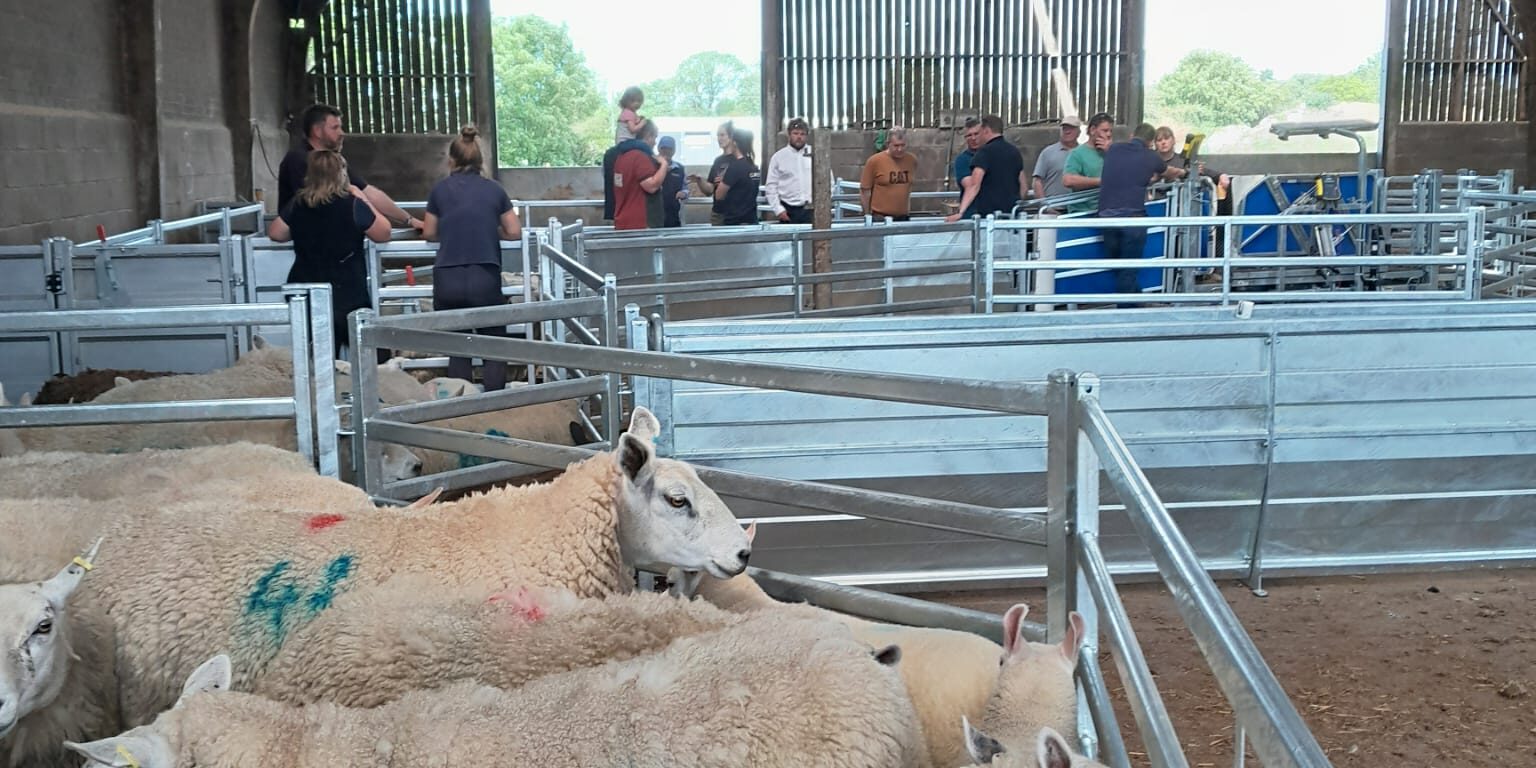
One-Man Sheep Handling System
Working sheep single-handed demands infrastructure that works with natural animal behaviour, not against it. Whether you are dosing, drafting, tagging, or scanning, a poorly designed handling yard turns a one-person job into an exhausting struggle.
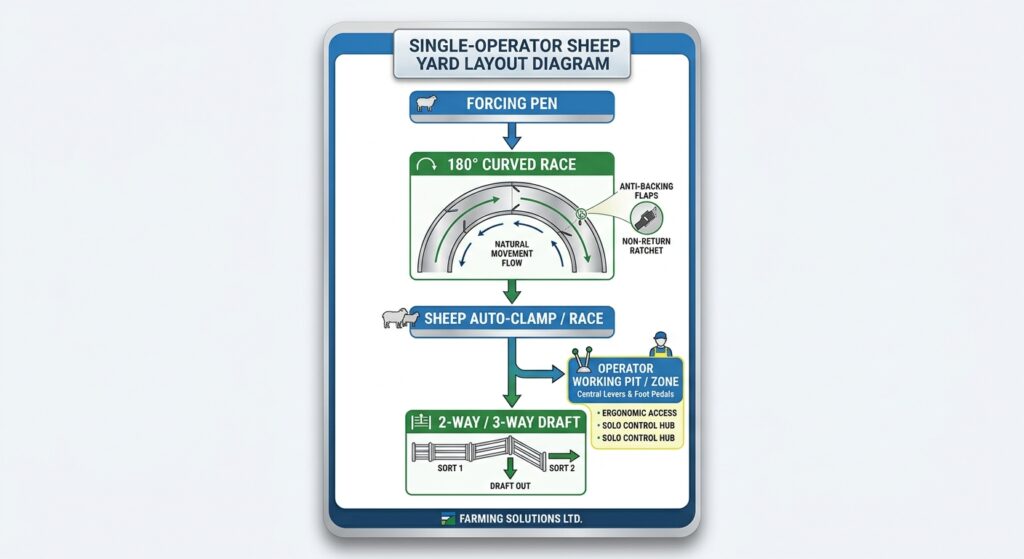
Designing a solo-operator sheep yard layout requires integrating curved raceways, optimal sheeted hurdle heights, anti-backing ratchets, and ergonomic shepherd positioning to maximise throughput while minimising stress on both livestock and operator.
Key Takeaways for Solo-Operator Sheep Yard Design
Exploit Natural Movement: Curved races use a sheep’s instinct to follow the leader and return to its point of origin, ensuring continuous sheep flow without force.
Eliminate Visual Distractions: Fully sheeted race hurdles prevent sheep from spotting the shepherd, dogs, or outside movement, reducing balking.
Stop Reversal Instantly: Gravity-operated anti-backing flaps keep sheep packed tightly in single file without manual intervention.
Protect the Shepherd: Ergonomic work heights (900mm–1000mm) and central valve/lever access prevent back strain and fatigue during long handling sessions.
Sheep Yard Design: How to Build a Safer, Faster Flow
Sheep Handling: Fix Yard Flow on UK Farms
1. Curved Races: Harnessing Natural Animal Behavior
When handling sheep alone, you cannot be in two places at once. Traditional straight races often cause sheep to balk at the entrance because they can see the person working at the front.
Why Curved Races Outperform Straight Lines:
The “Return” Instinct: Sheep naturally prefer to walk in a curve that leads them back toward where they entered or where the flock is held.
Blinded Sightlines: A well-designed 90° or 180° curved race prevents sheep at the rear from seeing the sheep handler, clamp, or drafting gate ahead, prompting them to follow the sheep in front seamlessly.
Optimal Radius: For UK commercial breeds, aim for an inner race radius of 3.0m to 4.5m. A curve that is too tight can cause stock to crowd and jam against the inner wall.
Sheeted Hurdle Height & Sightline Control
Sheeted hurdles (solid panels) are critical for single-operator systems. They hide foot traffic, working dogs, and background movement that otherwise cause sheep to stop or turn around.
| Component | Standard Height | Recommended Specification | Purpose |
| Race Hurdles | 900mm – 1000mm | Fully sheeted steel or HDPE | Prevents stock from looking over or jumping while obscuring outside distractions. |
| Forcing Pen Outer | 1000mm – 1100mm | Fully sheeted | Keeps sheep focused forward toward the race mouth. |
| Drafting Gates | 850mm – 900mm | Semi-sheeted / Low-profile | Allows the shepherd clear line-of-sight to identify tags and draft stock effortlessly. |
Pro Tip: Ensure the sheeted panels go down close to ground level (gap no larger than 50mm) to prevent lambs from catching legs or attempting to escape underneath.
3. Anti-Backing Flaps & Non-Return Ratchets
When dosing or tagging alone, sheep stepping backward in the race wastes valuable time and breaks animal flow.
Essential Flow Controls for Solo Operators:
Gravity Anti-Backing Flaps: Hinged flaps positioned along the race every 1.5m to 2.0m allow sheep to push forward easily. Once passed, the flap drops behind the sheep’s rump, preventing any backward movement.
Noise-Dampened Latches: Rubber-buffered or polymer flaps reduce metallic clatter, preventing skittish sheep from jumping or stalling.
Width-Adjustable Races: A race that is too wide allows smaller ewes or lambs to turn around. Maintain a tapered width of 400mm–450mm at the bottom and 500mm–550mm at the top.
4. Solo Shepherd Ergonomics & Working Zones
Operator fatigue is one of the leading causes of accidents when handling livestock alone. An ergonomic layout ensures every lever, gate, and dosing gun is within arm’s reach without constant bending or overreaching.
Ergonomic Best Practices:
Raised Work Platforms or Pits: Positioning the shepherd 200mm–300mm below or above the race height eliminates constant stooping when examining feet, mouth-scoring, or administering oral drench.
Remote Control Gate Release: Utilising foot-pedal operated drafting gates or pneumatic clamps leaves your hands free to handle dosing syringes or EID readers.
Central Access Hub: Design your layout so you can move from the forcing tub to the draft gate in three paces or fewer.
Internal Related Guides & Reading
Explore our full library of livestock handling guides to build a safe, efficient farm layout:
Yard Layout & System Design: How to Design a Safe and Efficient Cattle Handling System
Solo Safety: Designing Handling Systems for One-Person Operation
Youngstock Care: Calf Pen Design: The Ultimate Guide to Safer, Low-Stress Care
Labour Savings: How to Reduce Labour in Livestock Handling
Sheep Handling & Yard Design
Mobile Sheep Yards: Towing, Setup Times & Field Logistics
Ground Preparation & Pad Layout for Semi-Permanent Sheep Yards
Mobile vs. Fixed Sheep Yards: Calculating the ROI of Automated Handling
Sheep Handler EID Integration: Connecting Scales, Readers, and Software
Buyers Guides
Frequently Asked Questions (FAQs)
What is the ideal race width for mixed sheep breeds?
For standard UK lowland ewes, a race width of 450mm–500mm works best. If you run both large hill ewes and small lambs, consider installing an adjustable-width race panel that narrows to 380mm to prevent lambs turning around.
How many sheep should fit in a single-operator forcing pen?
A solo-operator forcing pen (circular sweep or bugle design) should hold 10 to 15 sheep at a time (approx. 3m to 4m sweep radius). Overcrowding a forcing tub leads to jamming and increases operator strain.
Can I get grant funding for sheep handling systems in the UK?
Yes, eligible equipment (such as sheep auto-clamps, mobile handling systems, and EID drafting crates) is frequently supported under the FETF (Farming Equipment and Technology Fund) livestock health and welfare items.
FETF 2026 Livestock Grant Guide: Secure 50% Funding
Retrofitting Livestock Handling System Layouts for FETF Grants
Need Help Customising Your Yard Layout?
At Farming Solutions Ltd, we design and supply modular, heavy-duty sheep handling equipment and sheep handling systems tailored to your farm’s exact terrain and stock numbers.
👉 Contact Our Engineering Team Today for a Custom Yard Layout Assessment